Opening one studio is a project. Opening five or ten in a year is a programme. Each site has its own building, landlord, contractor and opening date, and each depends on equipment arriving at the right moment. A delay at one site can ripple into the next if the plan is too tight, and equipment that arrives too early has to be stored somewhere.
This article sets out a practical way to plan equipment for a multi-site roll-out, from the opening date back to the order date, and how to build in enough flexibility to cope with the delays that every building programme has.
Plan each site backwards
For every site, start with the opening date and work back.
- Opening date. The day clients arrive.
- Staff training and soft opening. Usually a few days to a week before.
- Installation, checks and snagging. Time to install, inspect and fix small issues.
- Delivery. Equipment on site once the room is ready.
- Production. The lead time for the collections ordered.
- Approvals. Drawings, colours and any site-specific variations signed off.
The date at the end of that chain is the latest date to confirm the order. Miss it, and the opening date is at risk.
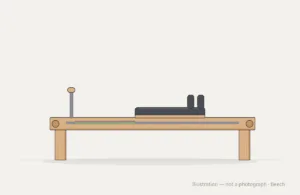
At Round Fit, Pilates equipment typically takes four to six weeks to produce, and other collections typically six to eight weeks, depending on the project. Those times start from approval, so the approval stage needs its own allowance.
Know when the room is really ready
Equipment should arrive after the room is finished, not while trades are still working.
- Floors laid and cured.
- Walls finished, with reinforcement in place for wall-mounted equipment.
- Power and data for reception, lockers and screens installed.
- Wet trades complete. New screeds and plaster release moisture as they dry. The Wood Handbook from the US Forest Products Laboratory explains that wood takes up moisture from the surrounding air and swells as it does, so timber equipment is best installed once the room has dried to its normal conditions.
Each site’s contractor should give a realistic “ready for fit-out” date, and the equipment plan should follow it.
Construction duties at each site
Each fit-out is a construction project in its own right. Under the Construction (Design and Management) Regulations 2015, the Health and Safety Executive explains that commercial clients must make suitable arrangements for managing the project and allow sufficient time and resources for each stage. Where more than one contractor is involved, a principal designer and a principal contractor must be appointed. Projects lasting more than 30 working days with more than 20 workers at any one time, or exceeding 500 person-days, must be notified to HSE.
A roll-out that compresses every site to the shortest possible programme puts pressure on all of these duties. Realistic timelines are safer as well as more reliable.
Group sites into batches
Where several sites open in the same period, group their equipment into one production batch.
- Consistency. Equipment made together from the same timber stock and finish batch matches more closely than pieces made months apart.
- Efficiency. One set of approvals, one production run.
- Clear labelling. Each piece is labelled for its destination site, so deliveries arrive complete.
Batches work best when the specification is identical across sites, with any permitted variations agreed in advance.
Build in buffers
Building programmes slip. A landlord delays handover, a contractor finds a problem, a permit takes longer. A good roll-out plan expects this.
- A buffer between the planned ready date and delivery, so a short delay does not cause a missed delivery.
- A buffer between installation and opening, so a problem found during installation can be fixed.
- Flexible delivery dates agreed with the maker, so equipment can be held briefly if a site is late.
- A clear process for changing dates, with a named contact on each side.
Installation and checks
Installation of Round Fit equipment is arranged through local distribution partners, who assess the wall before wall-mounted pieces are fixed. Use the same installation checklist at every site, so each studio is set up the same way.
After installation, check everything before opening. The Health and Safety Executive’s guidance on inspecting work equipment says that where safety depends on installation, equipment should be inspected after installation and before first use, and the result recorded. Every Round Fit piece is tested before it leaves the workshop, but a check on site is still essential.
A roll-out schedule
Keep one schedule for the whole programme, with a line for each site showing:
- Opening date.
- Ready-for-fit-out date.
- Latest order confirmation date.
- Approval date.
- Production batch.
- Delivery date.
- Installation date.
- Status and any risks.
Review it regularly with the project team and the maker, and update it as soon as a date moves.
Payment and approvals
Payment is typically 50 per cent at the start of production and 50 per cent at shipment. Make sure budget approval for each batch is in place before the order confirmation date, so finance does not become the cause of a delay.
See our solutions for chains and franchises. Send us your schedule and we will plan production and delivery backwards from each opening date.