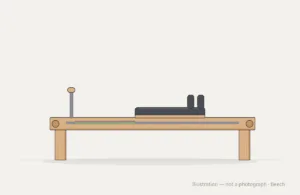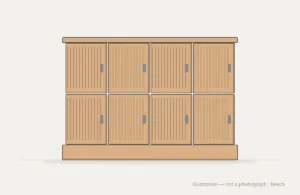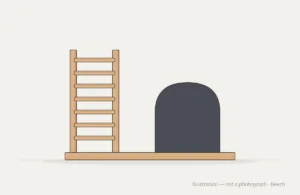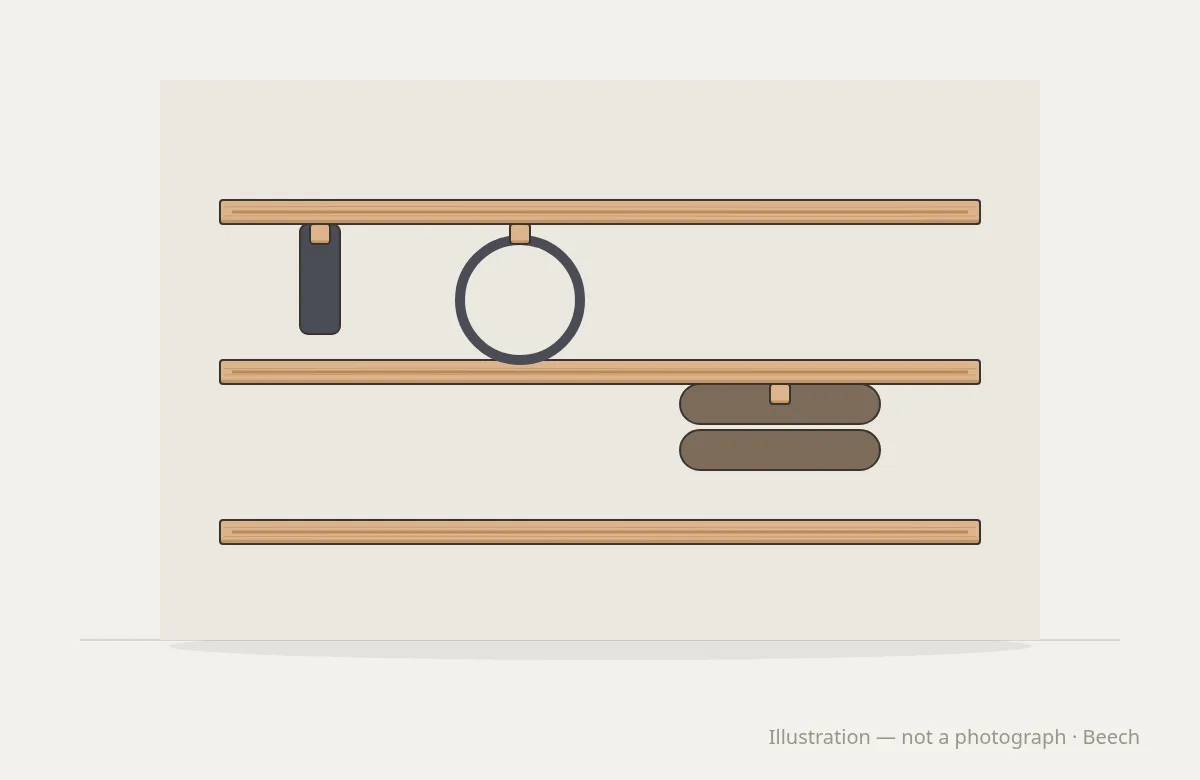
For a multi-site operator, installation is often harder to coordinate than production. The equipment is made in one workshop, to one specification. Installation happens at many sites, each with its own building, access, contractor and opening date. Getting each studio set up correctly, on time and in the same way, takes planning.
Round Fit arranges installation through local distribution partners who know their region. This article explains how that works and what the site needs to do so that installation goes smoothly.
Why local partners
A local partner brings practical advantages:
- Knowledge of the region, including typical building types, access and working practices.
- Shorter travel, so visits can be scheduled around each site’s programme.
- An assessment of the wall before wall-mounted pieces are fixed.
You can read more about our distribution network.
Before the partner arrives
Installation goes well when the site is ready. Before the visit:
The room is finished. Floors laid and cured, walls finished, ceilings complete. Equipment should not be installed while other trades are still working in the room.
The room is clean and dry. New screeds and plaster release moisture as they dry. The Wood Handbook from the US Forest Products Laboratory explains that wood takes up moisture from the surrounding air and swells as it does. Timber equipment is best installed once the room has dried to its normal temperature and humidity.
Access details are shared. Parking or loading for the delivery vehicle, lift sizes and weight limits, door widths and heights on the route to the room, and any restrictions on working hours. Large apparatus may need to be carried in sections and assembled in the room.
Walls are checked. Wall bars, barres, spring walls, yoga walls and racks need fixings chosen for the actual wall. BS 8539, the British Standard for selecting, installing and testing anchors in concrete and masonry, sets out the approach: choose anchors for the base material and load, specify them clearly and have them installed by a competent person. Stud partitions usually need reinforcement, which should be built in before the wall is finished. Share wall construction details with the partner in advance, so the right fixings are on hand.
Services are in place. Power and data for reception desks, lockers with electronic locks and screens should be installed and tested.
A site contact is named. Someone on site who can answer questions, give access and sign off the installation.
On the day
The partner unpacks, assembles, positions and fixes each piece, then checks it before handover. Keep the work area clear. The Health and Safety Executive notes that most trips at work are caused by obstructions in walkways, and an installation day brings packaging, tools and equipment into the room.
If the site is part of a wider construction project, the installation should fit within its safety arrangements. Under the Construction (Design and Management) Regulations 2015, the Health and Safety Executive explains that commercial clients must make suitable arrangements for managing the project, and that a principal contractor is appointed where more than one contractor is involved. The partner should be briefed on the site’s rules before arriving.
Checks and handover
Every Round Fit piece is tested before it leaves the workshop. After installation, the equipment should be checked again on site. The Health and Safety Executive’s guidance on inspecting work equipment says that where safety depends on installation, equipment should be inspected after installation and before first use, and the result recorded.
At handover, go through:
- Every fixing on wall-mounted pieces.
- Every adjustment, lock and moving part.
- Springs, ropes and straps on Pilates equipment.
- Upholstery and finish, for any damage in transit.
- Positions against the agreed layout.
Record what was checked and signed off.
Use the same checklist everywhere
For a chain, consistency matters as much at installation as in production. Use the same installation and handover checklist at every site:
- The same layout principles and clearances.
- The same positions for storage and accessories.
- The same checks before handover.
- The same record of what was installed and signed off.
That way, every studio opens set up the same way, and instructors moving between sites find everything where they expect it.
After installation
Keep the handover record with each site’s asset list. It will be useful for future inspections, repairs and additions. Agree with your own team who carries out routine checks, and ask about the service options available in your area when you plan the project.
If you are planning installation across several sites, contact us to discuss the programme.