A studio chain is built on consistency. A client who books a class in one location expects the same experience in another: the same equipment, the same feel, the same standard. Instructors who cover classes across sites expect to find the same machines set up the same way.
Without a written specification, that consistency drifts. One site’s reformers have a slightly different finish. Another has a different strap length. A third has upholstery in a shade that is close to the brand colour but not quite right. Each difference is small, but together they make the chain look less like one brand and more like a collection of studios.
The answer is one written equipment specification, used for every location and every order. This article explains what it should contain and how to keep it under control.
What goes into the specification
For each item of equipment, record:
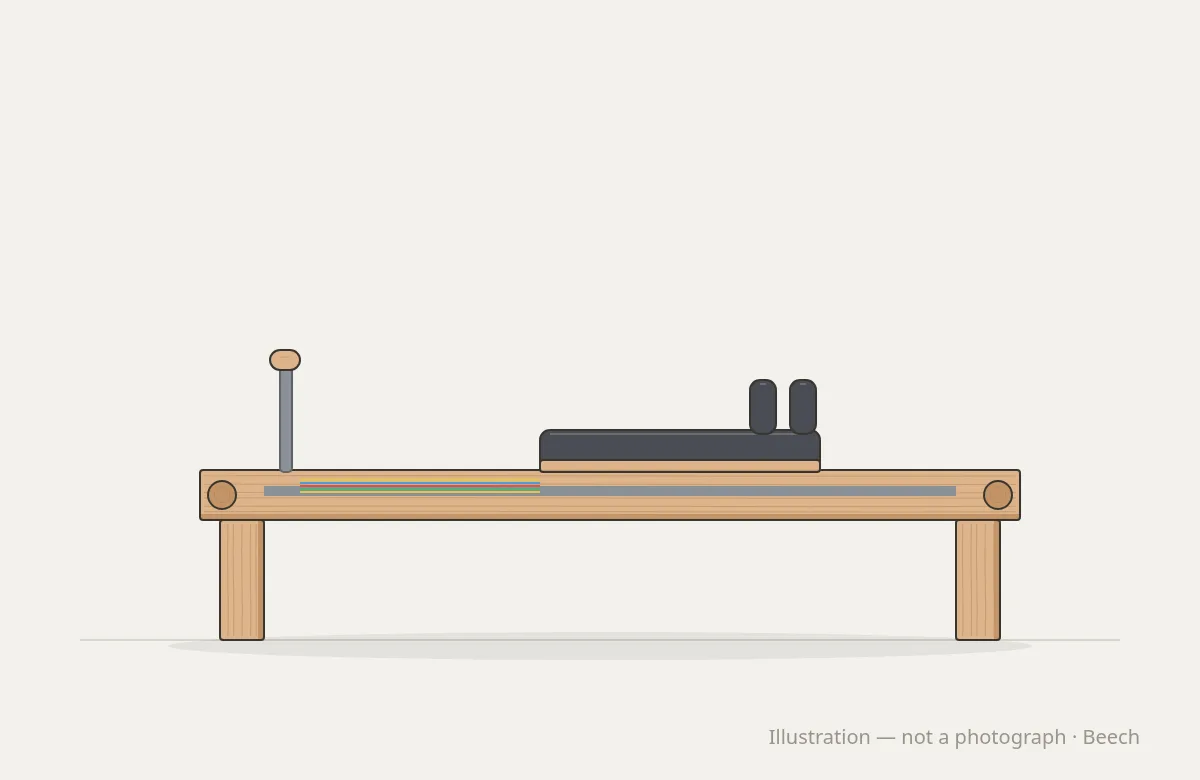
Dimensions. Length, width, height and any key internal dimensions, such as carriage size or rail heights. As a reference, the Round Fit Studio Pro Reformer is 235 cm long and 68.5 cm wide, with a carriage of 93 × 61.5 cm.
Timber species. Name the species, not just “hardwood” or “oak-look”. Beech, ash and oak behave and look differently, and a substitution changes the whole room.
Finish and sheen. Specify the finish type and, ideally, a measured sheen level. Gloss meters, described in ISO 2813, measure reflected light at set angles, and very matt surfaces below about 10 gloss units are usually measured at 85°. A number avoids the ambiguity of words like “satin” or “low sheen”.
Colours. Use recognised references. The RAL Classic collection uses four-digit codes such as RAL 1028, and the Natural Colour System uses codes such as S 1050-Y90R. Add physical samples on the actual timber.
Upholstery. Colour, material and performance. Abrasion is tested by the Martindale method under BS EN ISO 12947, and results of 40,000 rubs and above are generally treated as contract grade. For fire performance, contract upholstery in the UK is commonly specified to BS 7176. The independent testing organisation SATRA explains that the standard sets hazard levels by type of building and use.
Accessories. The standard set for each machine: sitting box, jump board, platform extender, straps, handles.
Branding. Logo artwork, position, size and method, such as engraving or inlay.
Standards and testing. The standards the design follows, for example EN ISO 20957-1:2024 for stationary training equipment, and how each piece is tested before dispatch.
Supporting documents
A written list is only part of the specification. Attach:
- Approved drawings for each item, with dimensions and details.
- Photographs of the signed-off sample, taken under neutral light, showing finish, colour, upholstery and branding.
- Physical samples of timber, finish and upholstery, kept at head office and, ideally, by the maker.
Permitted variations
Not every site is the same. A smaller studio may not have room for the full wall storage, or a site with a low ceiling may need a different tower option. Rather than allowing ad hoc changes, keep a short list of permitted variations:
- What may vary, for example the number of storage modules or the length of a barre.
- What must never vary, for example species, finish, colours, upholstery and branding.
- Who can approve a variation.
Everything not on the list stays fixed.
Version control
Specifications change over time. A new accessory is added, a colour is updated, a supplier for upholstery changes. Each change should create a new version of the specification:
- Give each revision a version number and date.
- Record what changed, and why.
- Reference the version on every order, so each machine can be matched to the specification it was built to.
- Keep previous versions, so spare parts and repairs for older sites can still be matched.
That way, a studio opening next year can be built to exactly the same standard as one that opened this year, or to an updated version, by deliberate choice rather than by accident.
Timber ages
Timber colour changes with light. The Wood Handbook from the US Forest Products Laboratory notes that indoors, visible light causes most colour change, because window glass blocks most ultraviolet radiation. A new site’s equipment may look slightly lighter or darker than equipment that has been in use for two years. That is natural, and it usually narrows as the new pieces age. Where a very consistent colour matters, stains or tinted finishes give more protection, because pigments block ultraviolet radiation.
Spare parts
Include parts that wear in the specification: ropes, straps, springs, upholstery covers, feet and wheels. When they are replaced, they should match the original. A strap of a different length or a spring of a different tension changes how a machine feels and how instructors cue it.
One workshop, one specification
The simplest way to keep a specification consistent is to order everything from one workshop, built to one reference. Round Fit builds equipment and studio interiors in its own workshop, can match timber and colour across an entire order and can build every order to your versioned specification. Every piece is tested before it leaves the workshop.
See the customisation options for what can be specified. If you are building a specification for a chain, talk to us.