The height of a barre affects every class held at it. Too low, and clients hunch to hold it. Too high, and shoulders lift and tense. The right height lets a client stand tall, rest a hand lightly and move freely. Because clients come in all heights, a studio usually needs a sensible compromise, or more than one height.
This article explains how barre height is usually chosen, what the published guidance says, and how to test it before fixing anything to the wall.
What the guidance says
Dance safety guidance gives practical figures:
- Ready-made barres come in heights from about 82 cm to 110 cm.
- For a personal height, stand upright with arms at your sides, bend the elbows to 90 degrees and measure from elbow to floor.
- Barres should be about 4 to 5 cm thick and comfortable to hold.
- Wall-mounted barres should project about 15 to 20 cm from the wall.
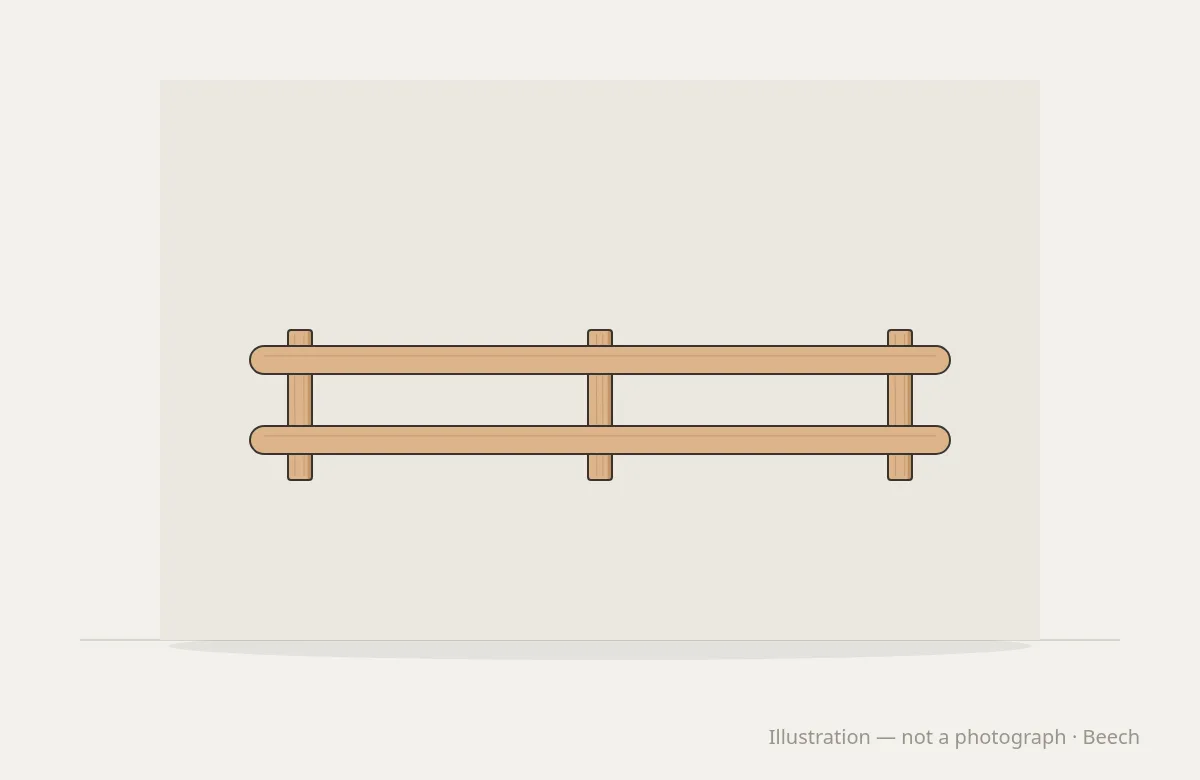
In ballet, the typical barre height is near the dancer’s waist, and some barres have two parallel rails at different heights for people of different heights.
One height or two?
A single barre works for many adult groups. Set it at a height that suits the middle of your client range. Taller clients can stand slightly further away; shorter clients can hold it lower on the arm.
A double barre adds a second rail lower down. It suits:
- Studios with a wide range of client heights.
- Classes that include stretching with a leg on the barre.
- Studios that teach teenagers or mixed groups.
As an example, the Round Fit Studio Flow Wall Barre is typically made with rails at 90 cm and 110 cm, single or double, and heights can be adjusted to the brief. The freestanding version uses the same two heights.
Matching the height to the method
Different formats use the barre differently:
- Ballet-based barre classes use the barre for light support, so a height near the waist or the bent elbow suits most clients.
- Fitness barre classes often use the barre for leaning, pressing and stretching, and some exercises place a leg on it. A lower second rail helps.
- Rehab and clinical use may need a height that suits patients’ support needs, which is best set with the physiotherapist.
Diameter and projection
Height is not the only dimension that matters.
Diameter. Dance safety guidance suggests about 4 to 5 cm. Too thin feels unstable; too thick is hard to grip for smaller hands.
Projection from the wall. About 15 to 20 cm gives room for the hand and for a leg on the barre without the foot hitting the wall.
Bracket spacing. Brackets should be close enough that the rail does not flex when a client leans on it. Long runs need intermediate brackets.
Test before you fix
A barre is fixed into the wall, so changing its height later means new holes and repairs. Test first:
- Ask your instructors which heights they prefer and which exercises they teach at the barre.
- Mark the wall at candidate heights with tape.
- Hold a temporary rail or a length of timber at those heights and try typical exercises with a few clients of different heights.
- Check the mirrors. The barre should not cut across the mirror at the eye line of most clients.
- Decide on one height or two, and on the length of each run.
Wall or freestanding
Wall barres are stable and save floor space, but they fix the class layout to one wall. Freestanding barres can be moved and stored, and suit multi-use rooms. Freestanding barres should be firmly secured. Whichever you choose, use the same heights in every room, so instructors’ cues work everywhere.
Checking heights over time
Barre heights rarely change once fixed, but the room around them can. A new floor finish, a thicker mat or a raised platform changes the effective height of the rail. When a floor is replaced, measure the barre again from the new finished level. On freestanding barres, check that the feet are level and the rails are still horizontal. Make this part of a routine inspection, together with the brackets, the fixings and the condition of the rail surface. A rail that has become sticky, rough or loose should be taken out of use until it is repaired.
Timber and finish
The rail is gripped constantly. A straight-grained hardwood, smooth along its full length, with a matt finish that is not slippery, gives a comfortable, natural grip. Round Fit makes barres in beech, ash, oak or any species on request.
See our Yoga & Barre collection. Talk to us if you would like help choosing heights.