A yoga wall gives students fixed anchor points for straps and ropes. With it, they can hang in supported inversions, find traction in forward bends, and feel alignment in standing poses. One teacher can guide several students at once, each supported by the wall. For studios that teach alignment-based yoga, it is one of the most useful installations they can make.
This article explains where the yoga wall comes from, how to plan stations, what the wall itself must be able to carry, and how to run classes on it.
A short history
Rope walls are closely associated with B. K. S. Iyengar. Iyengar used knotted ropes and anchors to improve alignment for more than 70 years. His 1966 book Light on Yoga set out a disciplined approach that required belts, bricks and ropes.
Rope walls have since spread from Iyengar studios into other styles, including vinyasa. Teachers find that students feel the correct alignment on the wall and carry that awareness into their floor practice.
Plan stations around the class
Start with the largest class you expect to run on the wall:
- Number of stations. One per student, plus one for demonstration.
- Width per station. Enough for a student to work with arms out, without touching the next person.
- Floor depth. Room in front for students to lie, sit, stand and step back from the wall.
Dance safety guidance suggests a minimum of 6 m² per student for dance classes. Yoga wall work is usually more static, but students still need room to move in and out of poses safely.
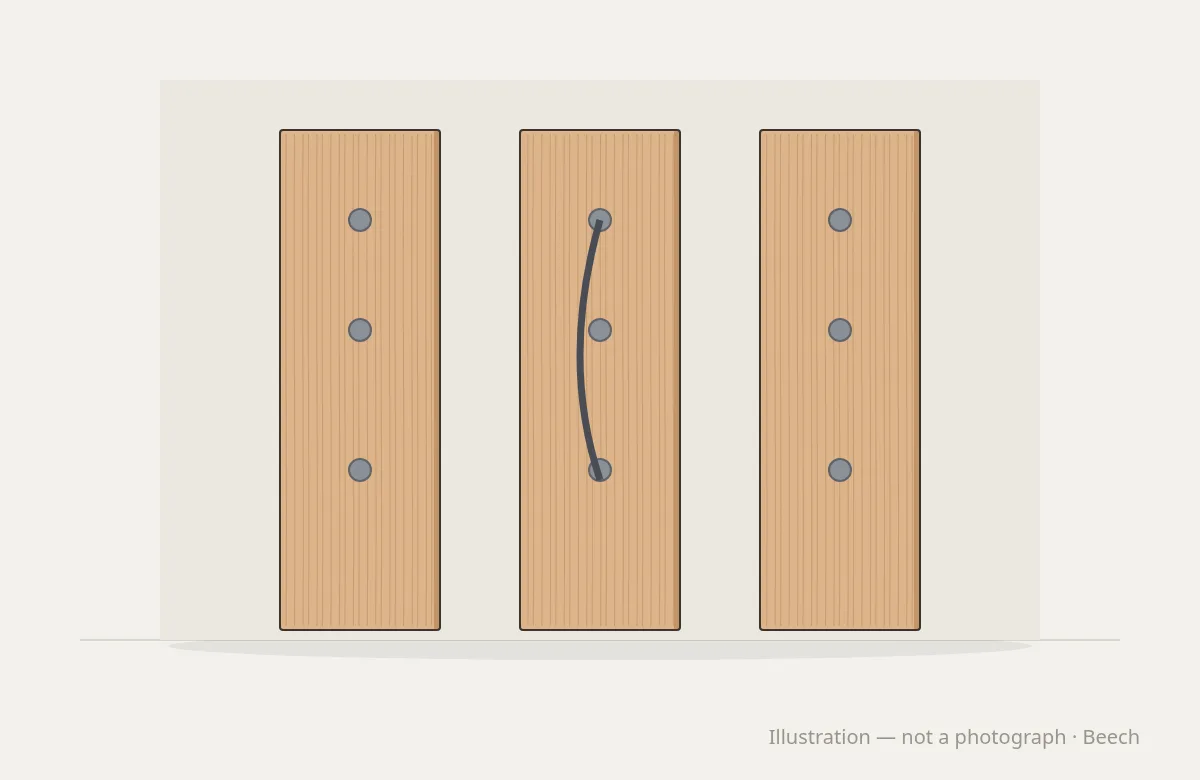
As an example, Round Fit Studio Flow Yoga Wall panels are typically 60 cm wide and 220 cm high, with anchor points for ropes and straps, laid out to suit the wall.
The wall must carry the load
A student hanging in a supported inversion puts their full body weight on the anchors, often with sudden changes of load. The wall behind the panels must carry that safely.
- Solid masonry or concrete is the best base.
- Lightweight partitions usually need reinforcement, such as a structural frame or backing fixed into the building structure.
- Check before ordering. Ask a builder or structural engineer to confirm what the wall is made of and what it can take.
In the UK, BS 8539 is the code of practice for selecting, installing and testing anchors in concrete and masonry. Its approach is that the specifier should assess the anchor’s suitability and specify it clearly, and the installer should use the specified anchor and have it inspected before load is applied.
Round Fit installs through local distribution partners, who assess the wall before fitting.
Ropes and straps
Ropes and straps are working parts. Inspect them regularly for thinning, fraying and wear at the ends, and replace them before they fail. Any sign of thinning needs attention, and frayed stitching should be fixed, just as with reformer straps.
Keep a set of spares, so a worn rope can be swapped without closing a station.
Running classes on the wall
- Teach newcomers first. Students new to the wall need a clear introduction to setting up ropes and getting in and out of inversions.
- Supervise inversions. The teacher should be able to see every station.
- Keep props close. Blocks, blankets and bolsters are often used with wall work; store them nearby.
- Keep the floor clear. The UK Health and Safety Executive notes that most trips are caused by obstructions in walkways.
Cleaning and hygiene
Ropes, straps and the wall itself are touched with bare hands and feet in every class. Wipe the panels and anchor points regularly with a mild cleaner that suits the finish. Cotton ropes and straps absorb sweat, so plan for them to be washed or replaced on a regular cycle, and keep spares so the wall is never out of use. Store loose straps off the floor, in a ventilated place, so they dry between classes. A matt lacquer on the panels makes them quick to wipe and keeps the timber looking clean for longer.
Matching the studio
A yoga wall is a large, permanent feature. Built in solid hardwood or plywood in the same timber and finish as other joinery, it looks like part of the studio rather than an add-on. A matt lacquer protects it from daily handling.
See the Studio Flow Yoga Wall in our Yoga & Barre collection. Share your wall dimensions with us.