When you buy commercial equipment, the purchase is only the start. Over the following years some parts will wear, some will be damaged, and the equipment will need regular inspection. Studios, clubs and hotels that plan for spare parts and servicing before they order avoid long periods with machines out of use.
This article sets out what to discuss with your supplier about spare parts and servicing, and how to organise it on your side.
Think in terms of the whole life
ISO 55000, the international standard on asset management, describes asset management as the coordinated activity of an organisation to realise value from its assets. Applied to a studio, that means thinking about equipment over its whole life, not just at the point of purchase: how it will be used, inspected, maintained, repaired and eventually replaced.
In practice, this comes down to a few questions you should be able to answer for every piece of equipment:
- Which parts will wear, and how often are they likely to need replacing?
- Where will replacement parts come from, and how long will they take to arrive?
- Who will inspect the equipment, and how often?
- Who will carry out repairs, and what records will be kept?
Know your wear parts
On most studio equipment, the parts that wear are predictable:
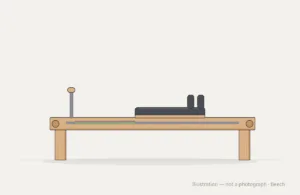
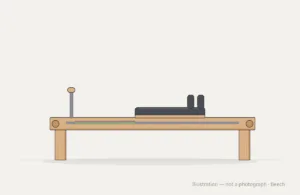
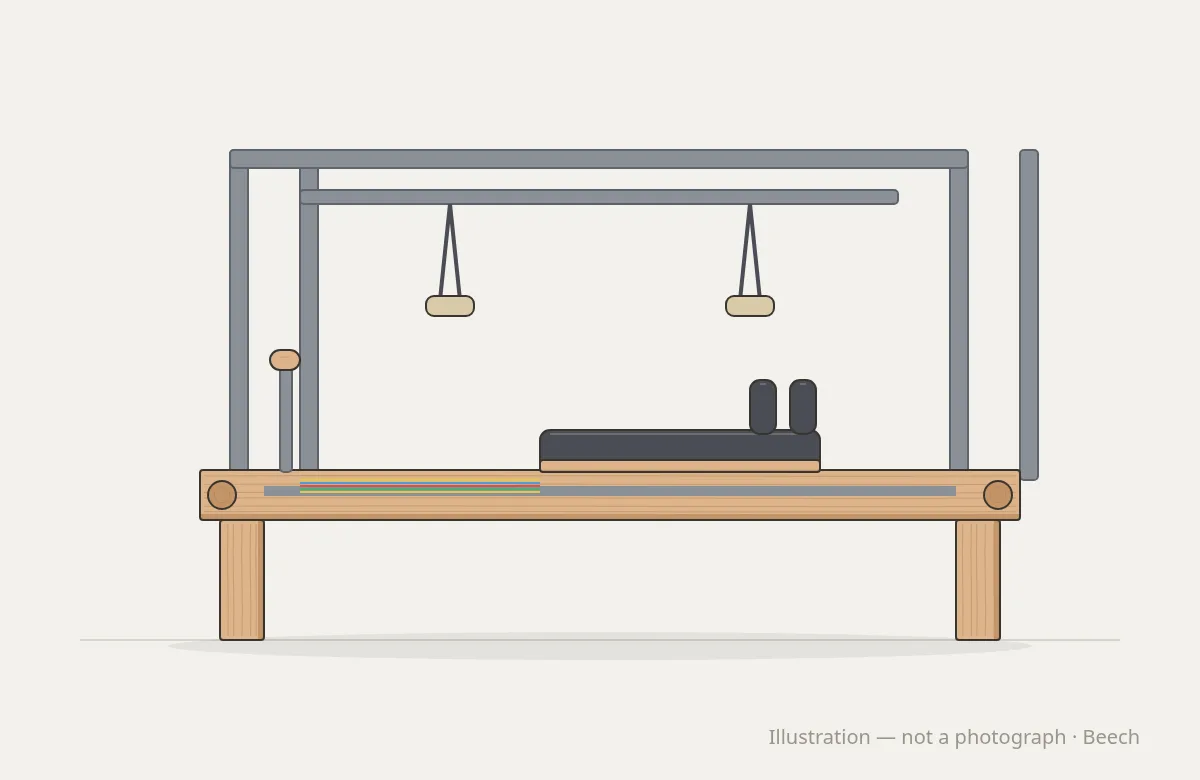
- Springs on reformers, towers and spring walls, which fatigue and lose force over time.
- Straps, ropes and loops, which fray and lose stitching.
- Wheels and bearings on moving carriages.
- Upholstery and foam, which wear through use and cleaning.
- Handles, grips and small fittings, which take repeated handling.
- Locks and batteries on lockers.
Frames, by contrast, are designed for a long life if they are cared for. Ask your supplier to list the wear parts for each piece and to give you guidance on replacement intervals for your expected level of use.
Questions to ask before you order
Which parts are standard and which are made to order? Some parts, such as springs and straps, may be available from stock. Others, such as upholstered pads in a custom colour, may need to be made.
How long do spare parts take? Ask for typical lead times for the main wear parts, so you can decide what to keep in stock.
What spares should we hold? For a busy studio, a small stock of springs, straps and common fittings lets a machine be returned to use the same day.
What documentation will we receive? You need instructions for use, care and maintenance, a list of parts, and details of the materials used, including the upholstery coating and which cleaning products are approved for it.
What does the warranty cover? Understand what is covered, for how long, and what is treated as normal wear.
Who installs the equipment, and who services it? These may not be the same. Ask your supplier who will carry out installation, and agree separately how inspection and repairs will be handled in your area.
Organise servicing on your side
In the UK, the Provision and Use of Work Equipment Regulations 1998 (PUWER) apply to equipment provided for use at work. The Health and Safety Executive’s guidance on inspection explains that equipment exposed to conditions that cause deterioration should be inspected at suitable intervals by a competent person, with a risk-based approach to frequency and records kept at least until the next inspection.
That usually means three layers:
- Daily and weekly checks by trained studio staff, using a checklist.
- Periodic, more detailed inspections by a competent person, at intervals based on use and risk.
- Repairs and part replacement, carried out to the manufacturer’s instructions with the correct parts.
Decide who is responsible for each layer and write it down. For chains, agree a common standard across all sites, so the same checks and records are kept everywhere.
Keep good records
For each piece of equipment, record:
- the model, specification and date of installation;
- the parts fitted and their replacement dates;
- inspection results and any action taken;
- repairs, who carried them out and which parts were used.
Good records show when parts are due, help you spot repeated faults and make warranty claims easier.
Standards and documentation
EN ISO 20957-1 sets general safety requirements for stationary training equipment used in clubs, studios and similar settings. Keep the manufacturer’s instructions for each machine with your records, and make sure replacement parts match the original specification.
How Round Fit works
Round Fit makes equipment in its own workshop in Ukraine, where timber is machined and steel is made in-house. Every piece is tested before it leaves the workshop, and frames carry a five-year warranty. Installation is carried out through our local distribution partners, who assess the wall before wall-mounted pieces are fixed. When you order, ask us to list the wear parts on each piece, so you can plan spares and servicing from the start.
Read about how we work and our distribution partners, or discuss your project with us.