Lacquered hardwood is one of the easiest surfaces in a studio to keep clean, provided it is cleaned the right way. A good lacquer seals the timber, so sweat and dust stay on the surface and can be wiped away. The wrong products or too much water, applied every day for months, can damage that seal and let moisture into the wood.
This article sets out a simple daily routine for matt-lacquered hardwood equipment in busy studios, gyms and clinics, and explains why each step matters.
Why the method matters
The Wood Handbook from the US Forest Products Laboratory is clear about what a finish does. It does not make wood waterproof. It slows the rate at which water enters and leaves the timber. The Handbook also notes that liquid water enters end grain 10 to 100 times faster than other faces.
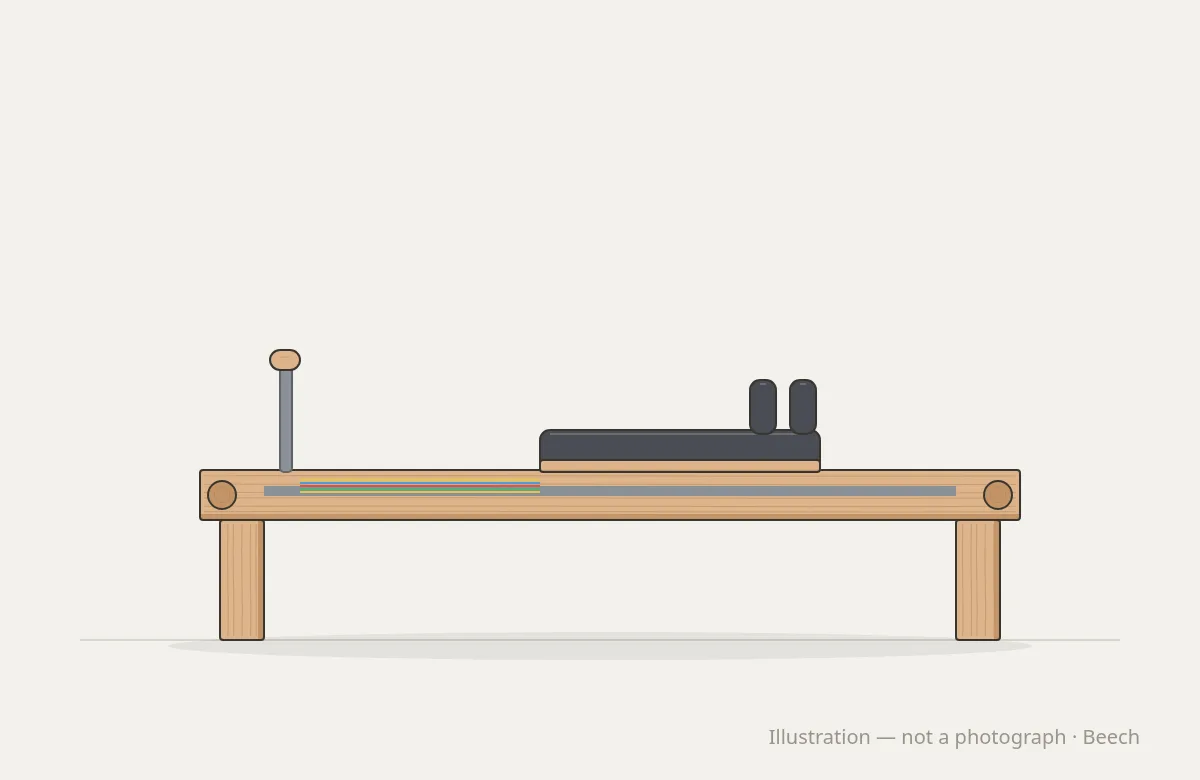
That explains the two main rules of cleaning timber equipment: keep water on the surface, not in the joints, and never let it pool where end grain meets the floor. The feet of frames, the ends of rails and the joints between parts are where problems start.
The daily routine
1. Use a soft, damp microfibre cloth. Microfibre lifts dust, sweat and skin oils without scratching. Dampen the cloth, not the equipment. A cloth that is wrung out until it is just damp is enough for most cleaning.
2. Add a mild, pH-neutral cleaner when needed. For everyday sweat and fingerprints, water alone is often enough. For heavier soiling, a few drops of a mild, pH-neutral cleaner in water works well. Strong alkaline or acidic cleaners can dull or soften some finishes over time.
3. Wipe along the grain. Following the grain lifts dirt from the surface texture and leaves a more even appearance.
4. Dry the surface straight away. Follow with a dry cloth. Do not leave equipment to air-dry with water on it, and pay particular attention to joints, feet and the ends of rails.
5. Look as you clean. A clean, dry surface makes small chips, scratches and worn patches easy to spot. Finding them early means they can be repaired before moisture gets in.
Disinfecting
Some studios, and all clinics, also disinfect contact surfaces. The US Centers for Disease Control and Prevention distinguishes cleaning, which removes dirt and germs from surfaces, from disinfecting, which kills germs. Disinfectants should be used according to their label, including the contact time the surface must stay wet for the product to work.
For lacquered timber:
- Clean first, then disinfect. A disinfectant applied to a dirty surface works less well.
- Check the product against the finish. Ask your equipment supplier, or test on an inconspicuous area first.
- Follow the label, including contact time and any instruction to wipe off residue.
- Do not flood the surface. Spray onto a cloth, or spray lightly and wipe, rather than soaking joints and end grain.
Products to avoid
- Abrasive pads and creams, which scratch the finish and can make a matt surface look patchy.
- Strong solvents, such as acetone or thinners, which can soften or cloud lacquer.
- Strong bleach solutions, which can damage the finish and nearby upholstery.
- Oily or waxy polishes, which leave a residue, attract dust and can make rails and handles slippery.
- Steam cleaners, which force hot moisture into joints and end grain.
Why matt helps
A matt lacquer hides the streaks, smears and fingerprints that make a gloss surface look dirty even after cleaning. Sheen can be measured with a gloss meter, as described in ISO 2813, and very matt surfaces below about 10 gloss units are usually measured at 85°. A low sheen keeps a natural, warm look and a secure grip on rails and handles.
Round Fit finishes its hardwood frames in a matt lacquer chosen for daily cleaning.
How finishes are tested
Resistance of furniture surfaces to liquids is assessed under BS EN 12720, which tests how a surface responds to set liquids, such as water and cleaning agents, over set contact times. If you plan to use a particular cleaner or disinfectant every day, ask whether the finish has been assessed against it.
Weekly and periodic care
Daily cleaning keeps equipment hygienic. A short weekly check keeps it in good condition:
- Look closely at the feet and lower parts of frames, where cleaning water collects.
- Check rails and handles for worn patches in the finish.
- Note any chips or scratches and arrange touch-ups.
Small areas of damage can often be repaired locally. Larger worn areas can be sanded and refinished, and because the base is solid hardwood, that can be done several times over the life of the equipment.
A one-line rule
Damp cloth, mild cleaner, wipe along the grain, dry straight away, and never let water stand on the timber.
See our customisation options for finishes and colours. Tell us about your studio and we will recommend a cleaning routine for your equipment.