The last class of the day ends, the clients leave, and the studio needs to be ready for the first class tomorrow morning. A clear closing routine makes that easy. It takes fifteen to thirty minutes, keeps equipment clean and in good condition, and means problems are found at night rather than in front of the first clients.
This article sets out a practical end-of-day routine for Pilates, yoga, barre and small strength studios.
Why a routine helps
Without a routine, closing tasks depend on who is on shift. Some things are done twice, others not at all. A written routine that every member of staff follows gives three benefits:
- Consistency. The studio looks and feels the same every morning.
- Early warning. Daily contact with every piece of equipment means wear and damage are noticed quickly.
- Longer equipment life. Sweat, dust and moisture are removed before they can do harm.
Step 1: Clear the room
Start by putting everything back where it belongs.
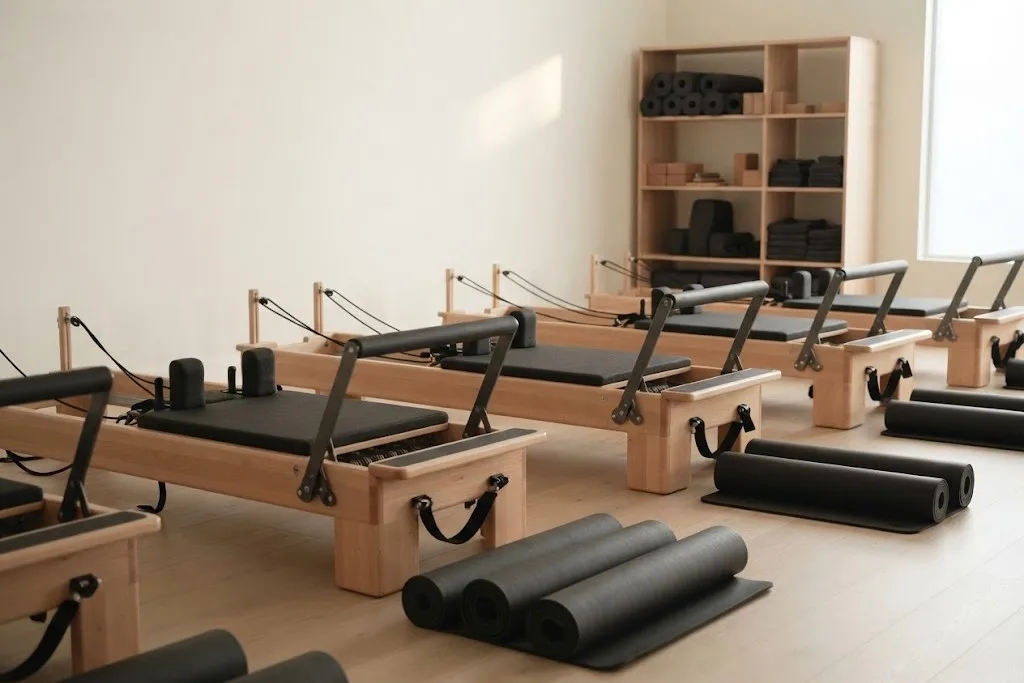
- Return mats, props, balls, bands and weights to their storage.
- Collect any personal items left behind.
- Move any equipment that was moved during classes back to its normal position.
The UK Health and Safety Executive notes that most trips are caused by obstructions in walkways. A clear floor at closing means a safe floor at opening.
Step 2: Clean contact surfaces
The US Centers for Disease Control and Prevention distinguishes cleaning, which removes dirt and germs from surfaces, from disinfecting, which kills germs. It advises cleaning first, then disinfecting where needed, using products according to their labels, including the contact time.
At the end of the day:
- Wipe all upholstery with a damp cloth and a mild cleaner, then dry it.
- Disinfect high-touch surfaces such as handles, straps, footbars, barre rails and reception counters, using products approved for each material.
- Wipe lacquered wood with a damp microfibre cloth along the grain, then dry it.
- Wipe props and mats, or set them out to dry before storing.
Spray onto a cloth rather than directly onto equipment, so liquid does not run into joints, seams or bearings.
Step 3: Look after moving parts
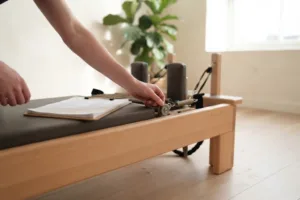
- Wipe reformer rails along their full length with a dry or barely damp cloth, removing hair and dust.
- Push each carriage through its full travel. Note any grinding, sticking or knocking.
- Leave springs unhooked or in their resting position, as your supplier recommends.
- Hang straps and ropes so they can dry.
Step 4: Quick visual check
As you clean, look for anything that has changed:
- splits or cracks in upholstery;
- frayed straps or damaged springs;
- loose fixings or new movement in frames;
- chips in the finish that expose bare wood;
- anything wall-mounted that has moved.
The HSE’s guidance on inspecting work equipment under PUWER describes a risk-based approach, with checks ranging from quick pre-use checks to weekly and more detailed periodic inspections. A daily look at closing fits naturally into that pattern. If you find a problem that could make equipment unsafe, take it out of use and record it, so the morning team knows.
Step 5: Floors
- Vacuum or sweep the studio floor, including under equipment.
- Mop if needed, using as little water as possible around timber equipment. The Wood Handbook from the US Forest Products Laboratory notes that end grain absorbs liquid water 10 to 100 times faster than other surfaces. Timber feet and legs often stand on end grain, so do not leave them sitting in water.
- Leave the floor to dry before closing.
Step 6: The room itself
- Empty bins and replace liners.
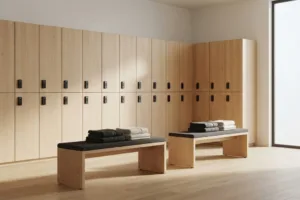
- Check changing rooms and toilets, and report anything that needs attention.
- Set heating, ventilation and air conditioning to their overnight settings. Avoid large swings in temperature and humidity overnight, which put timber under unnecessary stress.
- Close blinds on sunny windows if equipment stands nearby, to limit fading.
- Turn off lights, music and screens.
Step 7: Record and hand over
- Note anything found during the check in the equipment log.
- Leave a short note for the morning team about anything out of use, low stock of cleaning products or tasks not finished.
- Lock up and secure the building.
A closing checklist
| Area | Task |
|---|---|
| Floor | Props and personal items cleared |
| Upholstery | Cleaned, disinfected where needed and dried |
| Timber | Wiped along the grain and dried |
| Reformers | Rails wiped, carriages checked |
| Springs and straps | In resting position, straps hung to dry |
| Equipment | Quick visual check, issues recorded |
| Floors | Vacuumed, mopped if needed, dry |
| Room | Bins, climate settings, blinds, lights |
| Handover | Log updated, note left for morning |
Equipment that is easy to look after
Round Fit builds in solid hardwood and plywood only, never chipboard or MDF, with a matt lacquer finish that wipes clean and makes damage easy to see. Every piece is tested before it leaves the workshop, and frames carry a five-year warranty. When you order, ask us for care instructions for each piece, so they can go straight into your closing routine.
Explore studio interiors, the Pilates collection, or discuss your project with us.