In one studio, a worn strap or a tired spring is a small problem. Across a chain of ten or twenty sites, small wear items add up. Each one can take a reformer out of the timetable, and a machine out of use is a class with fewer places. Without a plan, every site deals with wear on its own, orders parts when something fails and waits.
A simple lifecycle plan changes that. It treats equipment as assets with a known life, tracks wear across the chain and keeps the right parts ready before they are needed. This article sets out how to do it.
Think in terms of assets
The international standard for asset management, ISO 55000, provides an overview and principles for managing assets over their whole life cycle, with the aim of enhancing the value realised from them. A studio chain does not need a formal asset management system to benefit from the idea. The principle is simple: know what you own, where it is, what condition it is in and what it will need.
1. Keep an asset list per site
For each site, record:
- Each piece of equipment, with its type and model.
- A serial number or batch reference.
- The date it was installed.
- The specification version it was built to.
- Its location in the studio.
Because a chain uses one specification, the asset list also shows which parts are interchangeable between sites.
2. Know which parts wear
Every piece of equipment has parts that wear faster than the frame:
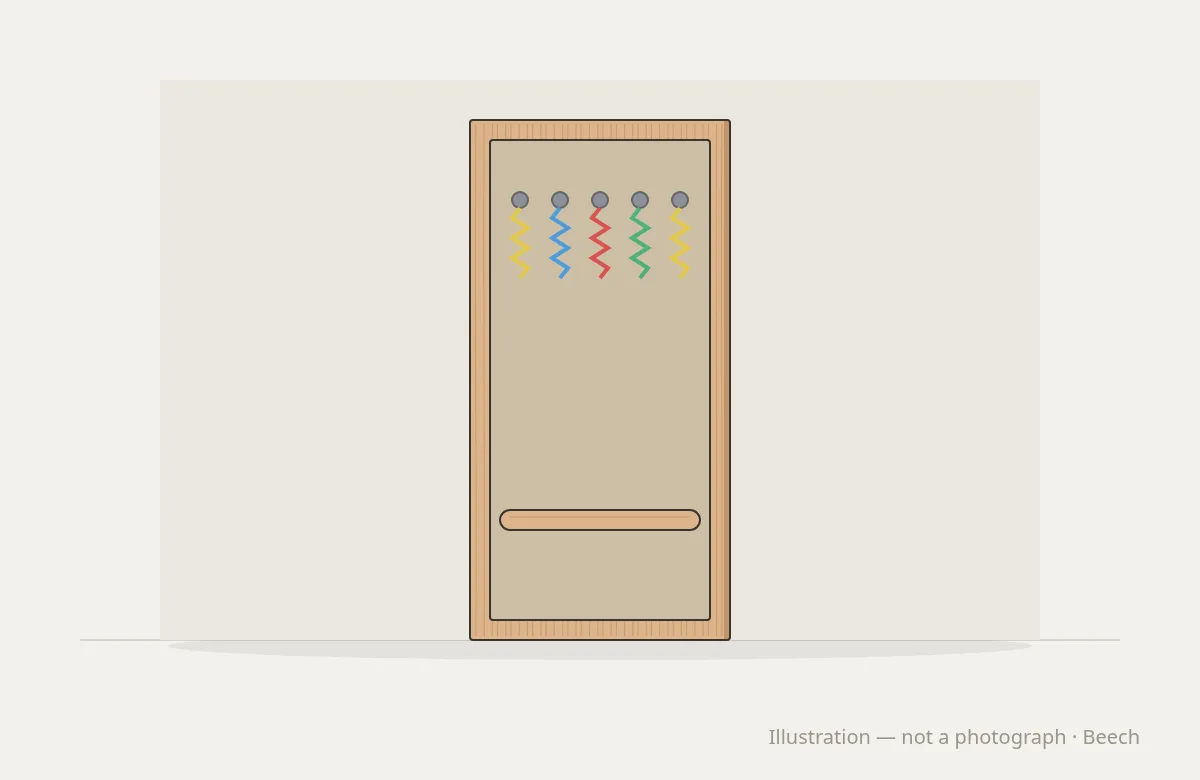
- Springs on reformers, towers and Cadillacs.
- Ropes, straps, loops and handles.
- Upholstery covers and foam.
- Wheels, feet and pads.
Experienced equipment technicians recommend a simple spring check: stretch each spring slightly from its end loop until the coils begin to open, and replace it if one section separates while the rest stay closed, or if it shows bends, rust or corrosion. Straps and ropes should be replaced at the first sign of thinning or fraying stitching.
Upholstery wears from abrasion and from cleaning. Abrasion resistance is tested by the Martindale method under BS EN ISO 12947, and results of 40,000 rubs and above are generally treated as contract grade. Cleaning products matter too. A comparison published by the Chemical Fabrics and Film Association notes that PVC tolerates disinfectants well, while polyurethane rates lower and has failed early with some quaternary ammonium cleaners. Using the right products extends cover life across every site.
3. Agree inspection intervals
The Health and Safety Executive’s guidance on inspecting work equipment says that where equipment is exposed to conditions causing deterioration liable to result in danger, it should be inspected at suitable intervals, set by risk assessment and informed by the manufacturer’s recommendations, industry advice and experience. Inspections can range from quick pre-use checks to weekly checks and more extensive examinations every few months. Results should be recorded and kept at least until the next inspection.
For a chain, agree the same intervals at every site:
- Daily: visual check of springs, ropes, straps and upholstery.
- Weekly: closer check of wearing parts and moving parts.
- Every few months: fixings checked and retightened, wearing parts replaced as needed.
The first months after installation deserve extra attention. The Wood Handbook from the US Forest Products Laboratory explains that bolted joints in new timber may need retightening as the wood settles.
4. Hold a small central stock
Because every site uses the same specification, parts are interchangeable. A small central stock of the parts that wear fastest lets any site replace a part within a day or two, instead of waiting for an order.
- Start with springs, ropes, straps and the most used upholstery covers.
- Size the stock to the number of machines and the replacement rate you observe.
- Replenish it as parts are used, before it runs out.
5. Log replacements
Record every replacement: what was replaced, on which machine, at which site and when. Over time, the log shows patterns:
- Parts that wear faster than expected.
- Sites where wear is higher, perhaps because of heavier use or different cleaning products.
- Machines that need more attention than others.
Spotting trends early lets you adjust inspection intervals, change cleaning products or order more stock before a problem spreads.
6. Plan for refurbishment
Frames last much longer than wearing parts. Solid hardwood can be sanded and refinished, and steel parts can be adjusted or replaced. Rather than replacing a whole machine, a chain can plan refurbishment: new upholstery, new springs and ropes, a refreshed finish. Every Round Fit frame carries a five-year warranty.
Talk to your supplier
Ask your supplier at the start:
- Which parts are expected to wear, and how often?
- How are replacement parts supplied, and how quickly?
- Can parts be matched to the specification version each machine was built to?
Agreeing this before the first site opens saves time across every site that follows.
See our solutions for chains and franchises. To discuss spare parts planning for your chain, get in touch.