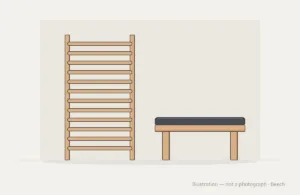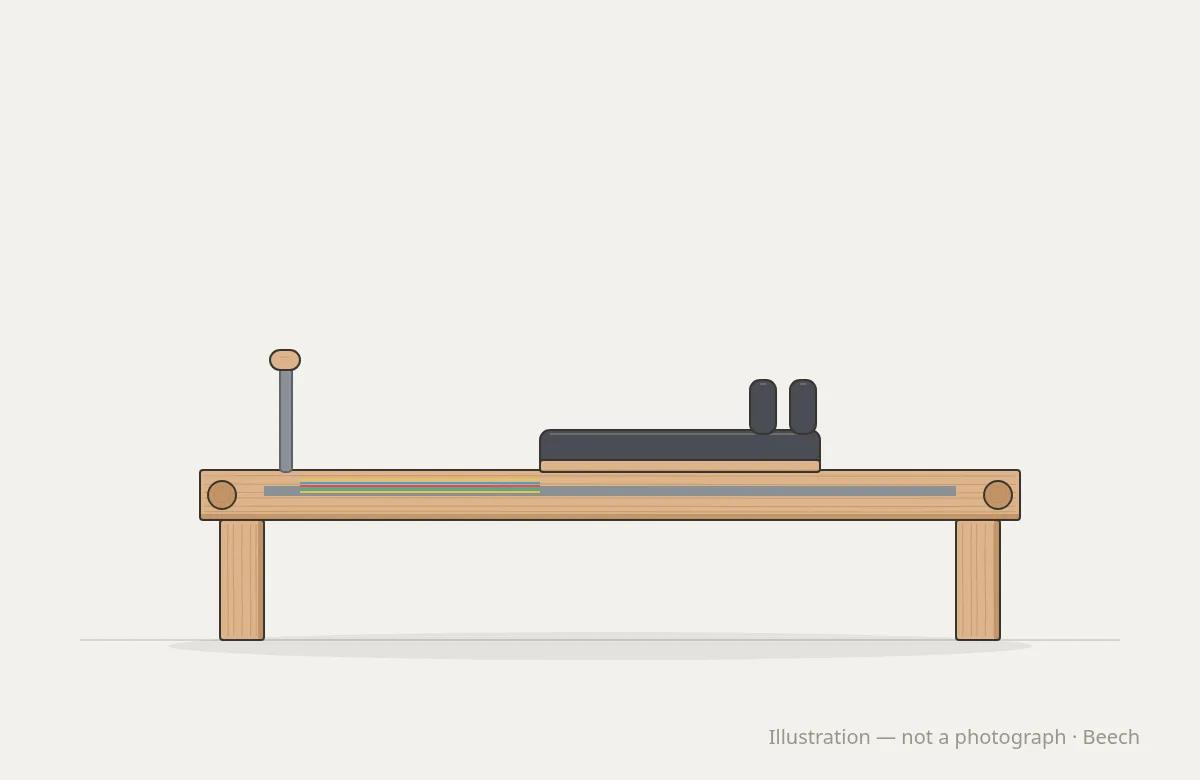
In a hotel or club gym, a piece of equipment out of use is noticed quickly. A reformer with a worn strap, a bench with a split cover or a wall bar that has worked loose cannot simply be ignored until someone has time. Members and guests expect everything to work, every day.
The best way to keep downtime short is to plan service before the equipment arrives. Who checks what, how often and who to call when something looks wrong should be agreed at the start, not after the first problem. This article sets out a simple, practical approach.
Why plan service early
When service is planned in advance:
- Staff know what to check and how often.
- Problems are found while they are small.
- Spare parts that wear, such as straps and springs, are on hand before they are needed.
- Equipment is taken out of use quickly and safely when something is wrong.
- The person to call is known, so nobody spends a morning searching for a number.
When it is not, small issues become big ones. A fraying strap breaks during a session. A loose bolt becomes a damaged frame.
A model from health and safety guidance
The Health and Safety Executive’s guidance on inspecting work equipment under the Provision and Use of Work Equipment Regulations 1998 (PUWER) offers a sensible model. It says equipment exposed to conditions that cause deterioration liable to result in danger should be inspected at suitable intervals, and after installation where safety depends on it. The frequency and scope should be set by risk assessment, taking account of the manufacturer’s recommendations, industry advice and experience. Inspections can range from quick pre-use checks to weekly checks and more extensive examinations every few months. Results should be recorded and kept at least until the next inspection.
Your own health and safety adviser can confirm how this applies to your premises. The principle is simple and useful: match the checks to how quickly things wear, and keep a record.
A simple service plan
Daily, by staff:
- Wipe down contact surfaces and upholstery.
- Look over each piece for obvious damage, loose parts, fraying straps or ropes, and anything on the floor that should not be there.
- Take anything that looks wrong out of use, with a clear sign, until it has been checked.
Weekly, by trained staff:
- Check springs for bends, rust or uneven coils.
- Check straps, ropes and loops for thinning or fraying stitching.
- Check upholstery for splits and wear.
- Check that wall-mounted pieces are firm and that adjustable parts lock properly.
Every few months, by a competent person:
- Check and retighten bolts and fixings.
- Inspect wall fixings and brackets.
- Replace parts that have reached the end of their life.
- Record what was checked and what was done.
The first year deserves extra attention. The Wood Handbook from the US Forest Products Laboratory explains that bolted joints in timber may need retightening as the wood settles, and that fasteners in wood exposed to repeated wetting and drying can lose much of their holding power. A check of all fixings a few months after installation is good practice.
Parts that wear
Every piece of equipment has parts that wear faster than the frame:
- Springs and ropes on Pilates equipment.
- Straps, loops and handles.
- Upholstery covers and foam.
- Feet, pads and wheels.
Keep a small stock of the parts that wear fastest, so a machine can be returned to use quickly. Ask your supplier which parts are expected to wear, how they are replaced and how they are supplied. Choosing equipment with replaceable upholstery, ropes and springs means wear is a simple swap, not a reason to replace a whole piece.
Cleaning without damage
Cleaning is part of service. The wrong products shorten the life of finishes and upholstery. A comparison published by the Chemical Fabrics and Film Association notes that PVC upholstery tolerates disinfectants well, while polyurethane rates lower and has failed early with some quaternary ammonium cleaners. The US Centers for Disease Control and Prevention advises following the label of any disinfectant, including its contact time. Agree the cleaning products with your supplier before they are used every day.
Who to call
Agree, in writing, who staff should contact when something looks wrong, and what they should do in the meantime. Put the details where staff will see them, not only in a file in the office.
Round Fit equipment is installed through local distribution partners, who also assess the wall before wall-mounted pieces are fixed. When you plan a project, ask about the service options available in your area, so the arrangements are clear before the equipment is installed. You can read more about how we work and our distribution network.
Built to be serviced
Service is easier when equipment is built for it. Solid timber frames can be refinished. Steel parts are designed to be adjusted and replaced. Upholstery can be renewed. Every Round Fit piece is tested before it leaves the workshop, and frames carry a five-year warranty.
A clear plan, a small stock of parts and a named contact keep equipment working and members happy.
If you are planning a club or hotel gym and want service arrangements settled from the start, get in touch.