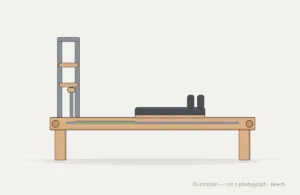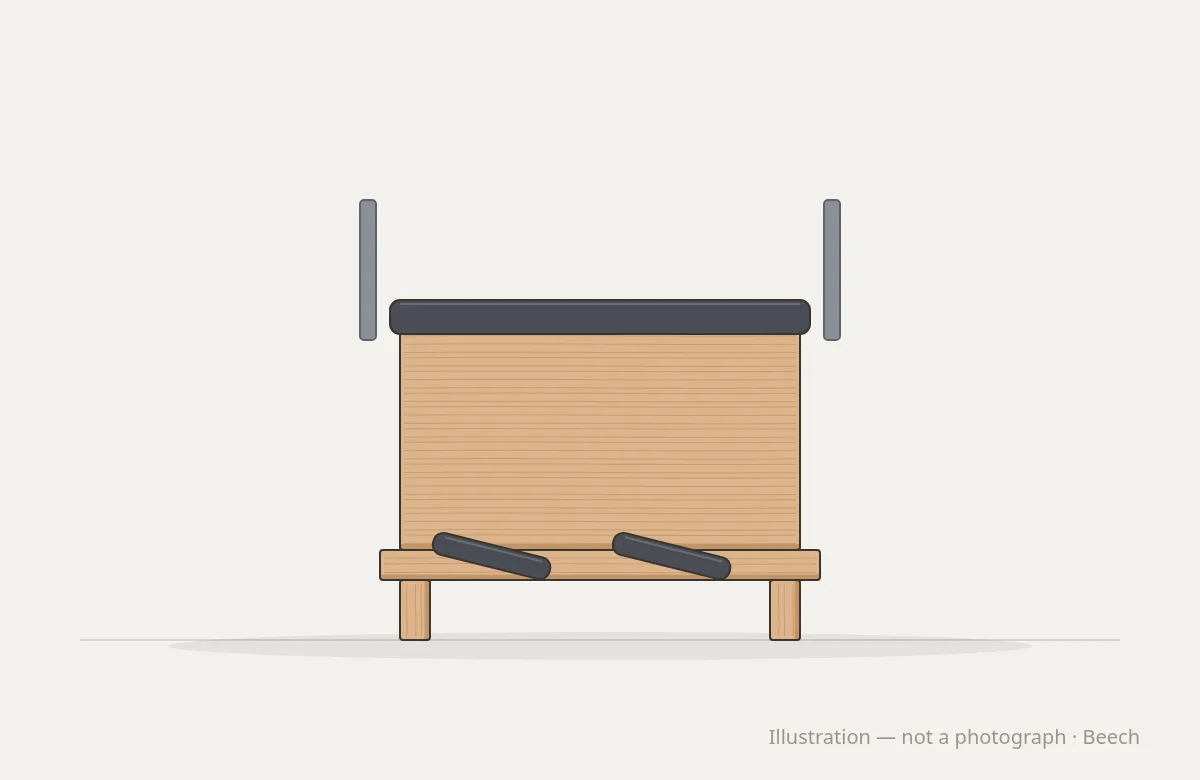
Upholstery is the part of a Pilates machine that clients touch most. It takes body weight, sweat, skin oils and repeated cleaning, often many times a day. A well-made commercial cover can stay in good condition for years, but only if it is cleaned in a way that suits the material. The wrong product, used every day, can shorten its life far more than heavy use does.
This article explains what commercial upholstery is usually made of, how to clean it day to day, and which habits wear it out early.
Know what the cover is made of
Most commercial Pilates upholstery is a coated fabric: a knitted or woven backing with a polymer layer on top. The two common coatings are PVC (vinyl) and polyurethane (PU). They look similar but behave differently.
The Chemical Fabrics and Film Association (CFFA), the US industry body for coated fabrics, notes that PVC coatings do not undergo significant hydrolysis, the slow breakdown of a polymer by moisture. Polyurethane coatings can be more sensitive. The CFFA also reports early failures of PU coatings cleaned repeatedly with quaternary ammonium disinfectants, a common family of products in gyms and clinics.
The practical lesson is simple. Ask your supplier what the coating is, and ask which cleaning and disinfecting products the manufacturer of that material has approved. Keep that information with the equipment records, so new staff do not have to guess.
A daily routine that protects the cover
1. Wipe after every client, where practical. A soft cloth dampened with water removes most sweat before it dries. Sweat left on the surface for hours is harder to remove and more likely to mark.
2. Use a mild cleaner for heavier soiling. A few drops of a mild, pH-neutral detergent in warm water is enough for most marks. Avoid solvents, abrasive pads and strong alkaline cleaners, which can strip the surface and leave it dull or tacky.
3. Rinse and dry. Wipe again with clean water if a cleaner was used, then dry with a soft cloth. Residue left on the surface attracts dirt and can affect the coating over time.
4. Pay attention to seams and edges. Dirt and liquid collect in stitch lines and along the edges where the cover wraps the board. Clean them gently and dry them well. Liquid that soaks into a seam reaches the foam and the timber below.
Disinfecting without damage
Many studios and all clinics disinfect contact surfaces. The US Centers for Disease Control and Prevention distinguishes cleaning, which removes dirt and germs, from disinfecting, which kills germs. It advises cleaning first, then using a disinfectant according to its label, including the contact time for which the surface must stay wet.
For upholstery, a few rules help:
- Only use products approved for the material. This matters most for PU coatings and quaternary ammonium products.
- Respect the contact time, then remove residue if the label says so. Residue that builds up day after day can affect the coating over time.
- Spray onto a cloth rather than soaking the cover, so liquid does not run into seams.
- Do not mix products. The CDC warns against mixing cleaning and disinfecting products, which can produce harmful fumes.
Habits that wear upholstery out
Abrasion resistance for upholstery fabrics is usually tested with the Martindale method, described in BS EN ISO 12947, in which a sample is rubbed under load until it shows wear. A high rub count is a good sign, but no cover is designed for sharp edges or grit.
The most common causes of early wear in studios are:
- Outdoor shoes and grit. Small stones and sand act like sandpaper. A no-shoes rule on equipment helps a great deal.
- Jewellery, zips and belt buckles. These cut and scratch coated surfaces.
- Sharp-edged props. Hard accessories dragged across a carriage or box can score the surface.
- Direct sunlight. Long exposure through a window can fade colour and dry out some coatings. Blinds or careful positioning help.
- Heat sources. Equipment placed hard against radiators or heaters can dry and crack covers.
Checking the condition
Make upholstery part of your weekly inspection. Look for:
- cracks, splits or peeling in the coating;
- loose or broken stitches;
- areas that feel sticky or have lost their surface texture;
- foam that no longer recovers its shape;
- damp or staining that suggests liquid has reached the board below.
A cover that is split or peeling can no longer be cleaned properly, because liquid and dirt get into the layers beneath. Plan to replace it. A separate article in this journal covers when to replace upholstery in more detail.
Do not forget the frame
Upholstery sits on a timber or plywood board, fixed to a frame. The Wood Handbook from the US Forest Products Laboratory explains that a finish slows the movement of moisture into wood but does not stop it. Water that runs off a wet cover onto the frame should be wiped away, especially at joints and end grain.
How Round Fit approaches upholstery
Round Fit makes its Pilates equipment in solid beech as standard, or in any species on request, with a matt lacquer finish and upholstery in a base palette or a custom colour. Every piece is tested before it leaves the workshop. When you order, ask us for the cover material and its approved cleaning products, and we will include them in your documentation.
Explore the Pilates collection, or discuss your project with us.