Many studios are fitted out in stages. The equipment comes from one supplier, the lockers from another, the reception desk from a joiner and the shelving from a catalogue. Each piece may be good on its own. Together, they can make the space look assembled rather than designed: three shades of oak, two kinds of finish, edges that do not quite match.
A single material language solves this. One timber species and one finish, used across the equipment and the interior, make a room feel calm and deliberate. Clients may not notice why the studio feels considered. They notice that it does.
What a material language is
A material language is a small set of decisions applied consistently:
- One primary timber species, or a deliberate pairing of two.
- One finish, with one level of sheen.
- A short colour palette, for stains, painted elements and upholstery.
- Consistent details, such as edge profiles, corner radii and the way metal meets wood.
Once these are fixed, every new piece follows them. A reformer, a locker bank, a barre and a reception desk then look as if they belong to the same family.
Choose the species early
The species sets the character of the room, so choose it first.
Beech is pale and very even in colour, with a fine, close grain. It suits light, Scandinavian-style interiors.
Ash is pale with a bolder, straight grain and more visible texture. It gives a slightly more energetic, contemporary look.
Oak is warmer, with a distinctive grain and visible rays when quartersawn. The Wood Database describes sessile oak as very similar in appearance and properties to English oak. It suits richer, more traditional or darker schemes.
All three are dense hardwoods with good strength for studio equipment. Round Fit works in beech, ash and oak, and in any other species on request, for example to match an existing floor or joinery.
If your floor is timber, consider it part of the material language. Equipment in the same species as the floor looks integrated. Equipment in a contrasting species can work too, but the contrast should be deliberate.
Fix one finish and one sheen
Two pieces in the same species can look quite different if their finishes differ. A gloss lacquer reflects light and looks darker and richer. A matt lacquer looks softer and closer to raw timber.
Sheen can be measured. Gloss meters, described in ISO 2813, measure how much light a surface reflects at set angles. Very matt surfaces, below about 10 gloss units, are usually measured at 85°. Specifying a sheen level, rather than a word like “satin”, helps different makers deliver the same result.
Round Fit uses a matt lacquer across its equipment and interiors. It resists daily cleaning, feels natural and does not show fingerprints and wipe marks the way gloss does.
Colour, stain and paint
A material language can include colour. A studio brand might use natural oak for equipment and a deep green for lockers, or stain everything to one tone.
Colour standards help keep this consistent. The RAL Classic collection uses four-digit references such as RAL 1028, and the Natural Colour System describes colours by blackness, chromaticness and hue, in codes such as S 1050-Y90R. If your brand guidelines give one of these references, every maker can work to it. Always approve a physical sample on the actual timber, because the same stain looks different on beech, ash and oak.
Expect timber to age
Timber colour changes with light. The Wood Handbook from the US Forest Products Laboratory notes that ordinary window glass blocks most ultraviolet radiation, so indoors it is visible light that causes most colour change. The Handbook also explains that pigments block ultraviolet radiation, so more pigmented finishes generally give more protection.
This has a practical consequence. Pieces installed at different times will not match perfectly at first. A new locker bank next to a two-year-old reception desk may look lighter or darker. The difference usually narrows as the newer piece ages, but it is worth planning for:
- Order matching pieces together where possible.
- Ask for samples to be aged in the room before approving a colour.
- Choose stains or tinted finishes if a very consistent colour matters to your brand.
Order from one workshop
The easiest way to keep a material language consistent is to order equipment and interiors from the same workshop. One maker selects timber from the same stock, uses the same finish system and applies the same details to every piece.
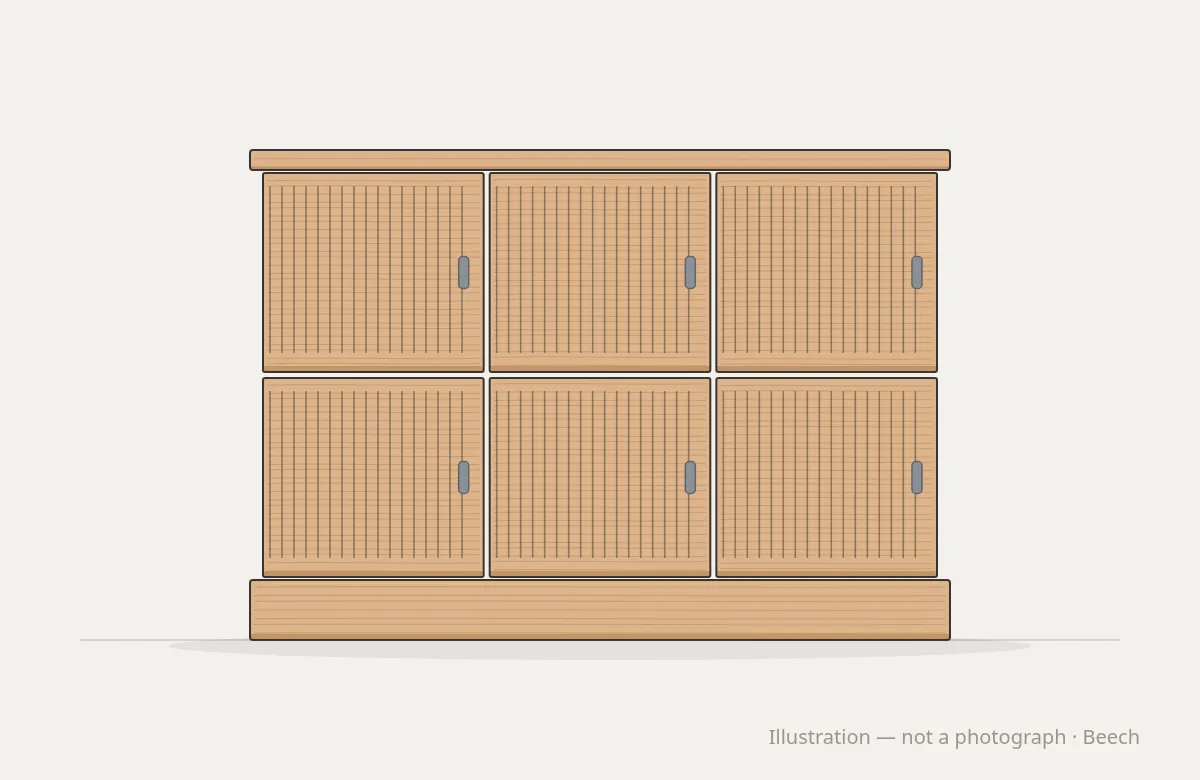
Round Fit makes its equipment and interiors in its own workshop, and can match timber and colour across an entire order, from reformers and barres to lockers, benches, reception desks and shelving. Every piece is tested before it leaves the workshop.
A short checklist
- Choose the primary species, and decide how it relates to the floor.
- Fix one finish and, ideally, a measured sheen level.
- Agree a short colour palette with RAL or NCS references.
- Approve physical samples on the actual timber.
- Order matching pieces together where possible.
- Keep details such as edges and corners consistent across every piece.
See our customisation options and Studio Interiors range. Share a moodboard or discuss your project with us, and we will propose a material language for your space.