The bench is one of the simplest pieces of equipment in a studio, and one of the most used. Clients press on it, row from it, step onto it, sit on it between sets and use it for hip work. The question most operators face is whether to buy flat benches, adjustable benches or a mix.
The answer depends on the programme, the space and how much handling the bench will get. This article sets out the differences and the checks that matter for commercial use.
The relevant standard
Benches used for strength training are covered by EN ISO 20957-4, the part of the stationary training equipment series that sets safety requirements for strength training benches. It is read alongside the general part, EN ISO 20957-1, which covers equipment in studios, clubs, hotels and rehabilitation centres as well as domestic equipment. Ask whether a bench has been designed and tested with these standards in mind.
The flat bench
A flat bench has a fixed, horizontal pad on a frame. Nothing moves.
Strengths: – Stable. With no adjustment, there is nothing to loosen or misalign. – Fast. Clients use it straight away, with no setting to choose. – Versatile in group classes. Step-ups, supported rows, hip thrusts, seated work and many bodyweight exercises. – Simple to maintain. Fewer parts mean fewer checks.
Limits: – No incline or upright positions for pressing or supported seated work.
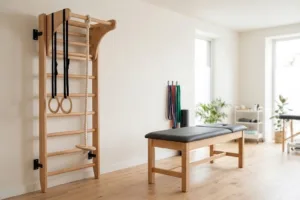
As an example, the Round Fit Studio Strength Flat Bench is typically 120 cm long, 30 cm wide and 45 cm high, in solid hardwood with an upholstered pad, and can be adjusted to the brief.
Best for: group classes, circuits and studios where speed of changeover matters.
The adjustable bench
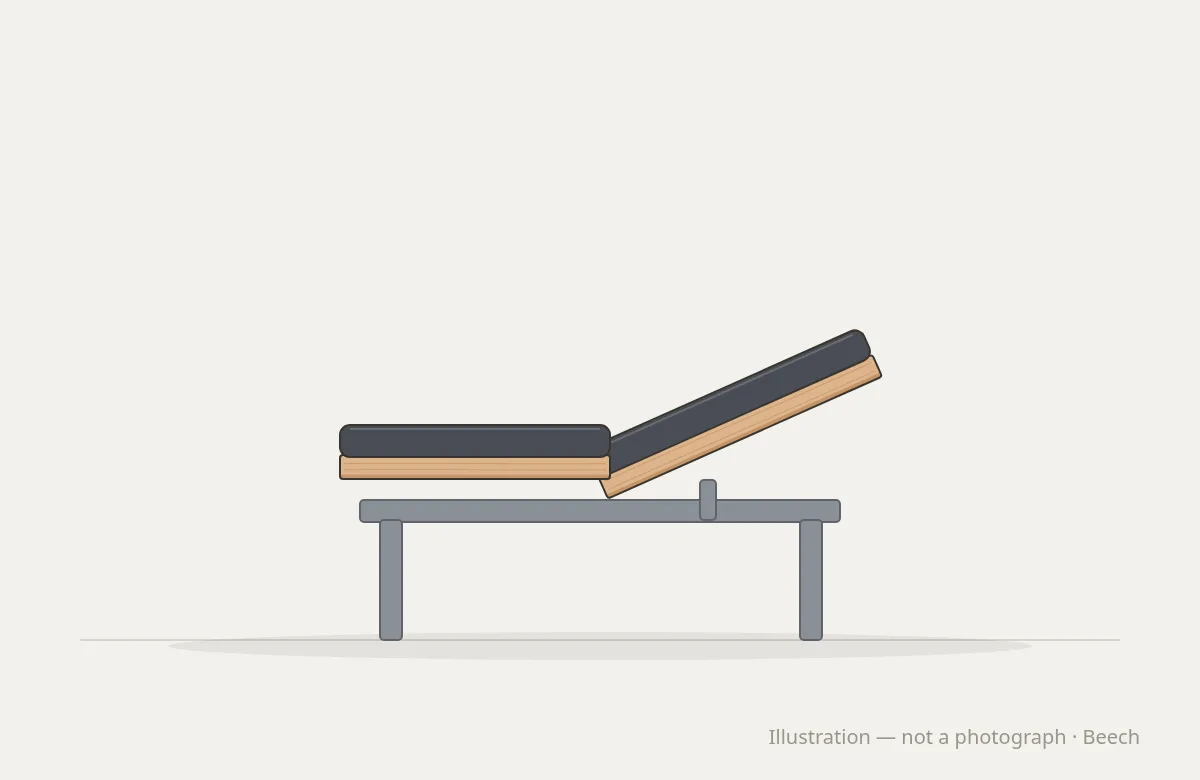
An adjustable bench has a back pad that moves from flat to incline to upright, and sometimes a seat that adjusts too.
Strengths: – More exercises. Incline pressing, supported seated work and positions that suit different clients. – One bench, many uses. Useful where space allows only one or two benches.
Limits: – Adjustment takes time, which slows group classes. – More parts to check. Locking pins, pivots and the adjustment mechanism need regular inspection. – Heavier, so moving it around the room takes more effort.
The Round Fit Studio Strength Adjustable Bench is typically 130 cm long, 30 cm wide and 45 cm high, with a solid hardwood seat and back on a steel adjustment mechanism, and typically seven positions from flat to upright.
Best for: personal training, private sessions and hotel gyms where one bench must serve many purposes.
Height and stability
Bench height matters for step-ups and for clients getting on and off. A height of about 45 cm, as on the benches above, is a common choice for seated work and step-ups. Taller or shorter users may benefit from a step or a different bench height, which can be specified on a bespoke bench.
Stability matters more. A bench should not rock or slide when a client steps on one end or sits on the edge. Feet should sit flat and grip the floor.
Upholstery
The bench pad is in full-body contact with many clients a day. Three points:
- Cover. A comparison from the Chemical Fabrics and Film Association notes that PVC is not subject to hydrolysis to any significant degree and tolerates disinfectants well, while polyurethane rates lower with disinfectants.
- Abrasion. Martindale results of 40,000 rubs and above are generally treated as contract grade, and 100,000 rubs and above as severe contract.
- Foam. A pad should be firm enough to support pressing without bottoming out.
Moving and storing benches
Benches are moved between classes. The UK Health and Safety Executive’s manual handling risk filters note that acceptable weights reduce when items are handled at low levels or with arms extended. Handles or wheels at one end make a heavy bench much easier to move. Plan where benches go when not in use, so they do not block walkways.
A mix often works best
Many studios find a mix works well:
- Flat benches for group classes, one per station.
- One or two adjustable benches for personal training and private sessions.
Hotels with a single gym room may choose adjustable benches only, because each bench needs to cover more uses.
Checklist
- What exercises does the programme need?
- How many benches are in use at once?
- How quickly must the room change over?
- Who will move the benches, and how often?
- What cleaning products will be used on the upholstery?
- Does the bench follow EN ISO 20957-4, and how is it tested?
Every Round Fit piece is tested before it leaves the workshop. See benches in our Strength & Functional collection, or ask us.