When a chain equips several sites, it can order piece by piece as each site opens, or it can group sites and order in batches. For wooden equipment and interiors, batches have a clear advantage: consistency. Timber, finish and upholstery prepared together match more closely than pieces made months apart.
This article explains why batch production helps, how to plan a batch and what to confirm before production starts.
Why timber varies
Timber is a natural material. Two boards of the same species can differ in colour, grain and figure, depending on where the tree grew, which part of the log they came from and how they were cut. Beech is known for a pale, even colour; ash and oak show more variation in grain and tone. Even within one species, a batch of timber selected and machined together will be more uniform than timber bought at different times.
Moisture matters too. The Wood Handbook from the US Forest Products Laboratory explains that wood exchanges moisture with the surrounding air until it reaches balance, and swells or shrinks as its moisture content changes. Timber that is dried and machined together reaches the same condition, so pieces in a batch behave alike once installed.
Why finishes and colours vary
Finishes are applied in batches too. A stain or tinted lacquer mixed for one production run may differ slightly from the next, even to the same reference. Two pieces finished together will match more closely than two finished months apart.
Colour also depends on light. Datacolor, a colour measurement company, explains that two samples can match under one light source and differ under another, a phenomenon called metamerism. Pieces made from the same timber and finish batch are less likely to show this kind of mismatch than pieces made from different batches.
And timber changes with age. The Wood Handbook notes that indoors, visible light causes most colour change in wood. A piece made a year later will look lighter or darker than the original at first, though the difference usually narrows over time.
What batch production gives a chain
- Closer colour and grain match across sites that open together.
- One set of approvals. Drawings, samples and colours signed off once.
- One production run, which is easier to plan and track.
- Consistent quality, with every piece built and checked to the same reference.
Planning a batch
Group sites that open in the same period. If three studios open within a few months of each other, their equipment can often be made in one batch. Plan delivery for each site separately, but produce together.
Confirm the full specification before production starts. Every item, every dimension, every colour and every accessory should be fixed and approved. Changes during production are costly and break the consistency that batching is meant to deliver.
Agree permitted variations in advance. If one site needs a shorter barre or fewer storage modules, record that before the batch starts.
Label each piece by destination. Every item should carry a clear label showing its destination site, so deliveries arrive complete and nothing is mixed up between sites.
Allow for lead time. At Round Fit, Pilates equipment typically takes four to six weeks and other collections typically six to eight weeks, from approval. A large batch may be planned in stages, with the earliest site’s equipment first.
What can be batched
Almost everything in a studio can be made in batches:
- Pilates equipment: reformers, towers, Cadillacs, chairs and barrels.
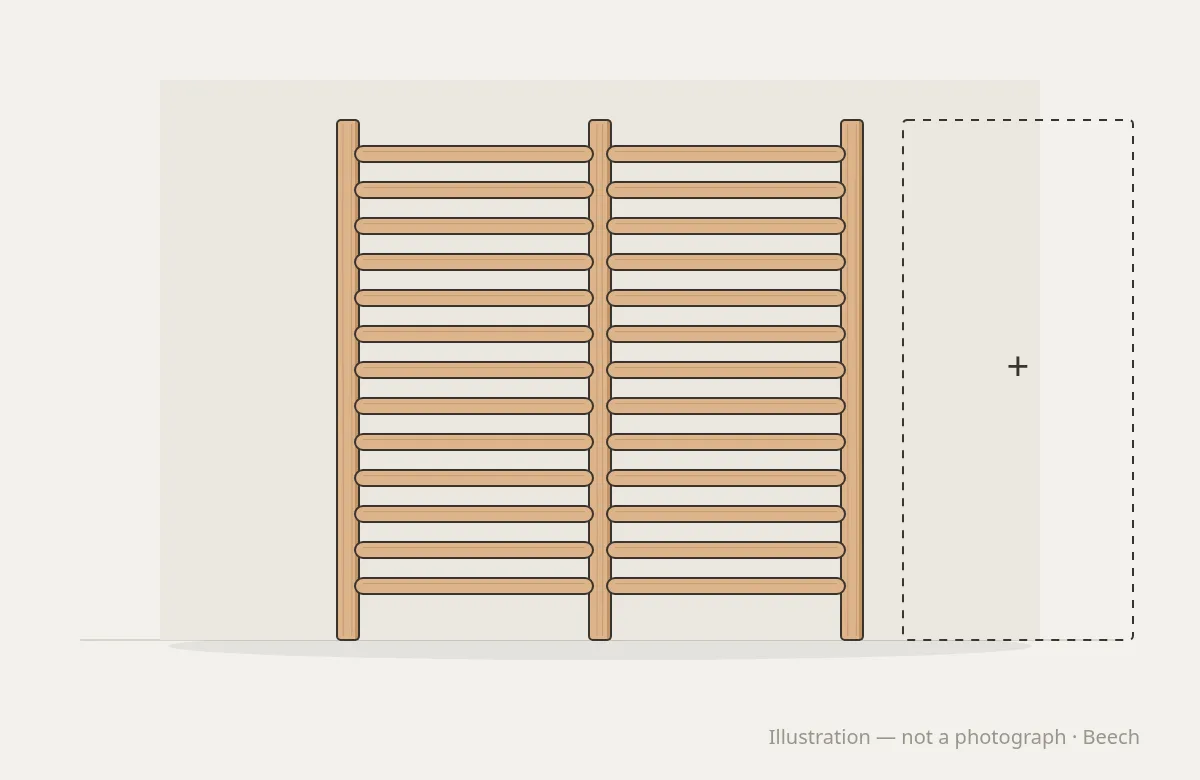
- Strength and functional equipment: wall bars, benches, plyo boxes, racks.
- Yoga and barre equipment: barres, yoga walls, prop storage.
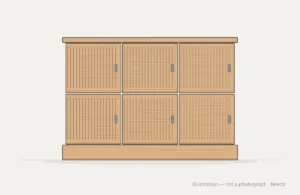
- Studio interiors: lockers, changing benches, reception desks, retail shelving, mirror frames, slatted panels.
Ordering equipment and interiors together in one batch keeps the timber and finish consistent across the whole studio, not just across one type of equipment.
Quality in a batch
Batch production should never mean lower attention to each piece. Commercial equipment should be designed to recognised standards. The international safety standard for stationary training equipment, EN ISO 20957-1:2024, sets general safety requirements for equipment used in studios, clubs, hotels and rehabilitation centres.
Round Fit machines its timber and makes its steel parts in its own workshop, in beech, ash, oak or any other species, with plywood where it suits the piece and never chipboard or MDF. Every piece is tested before it leaves the workshop, and frames carry a five-year warranty.
Keep a reference
Keep one approved sample, or physical samples of timber, finish and upholstery, at head office and out of direct light. When a later site is added, the new batch can be checked against it.
See the Strength and Functional collection and the rest of our range. If you are planning several sites, contact us to discuss batch production.