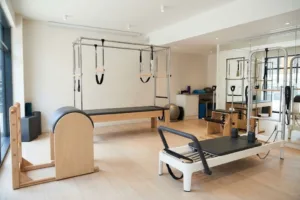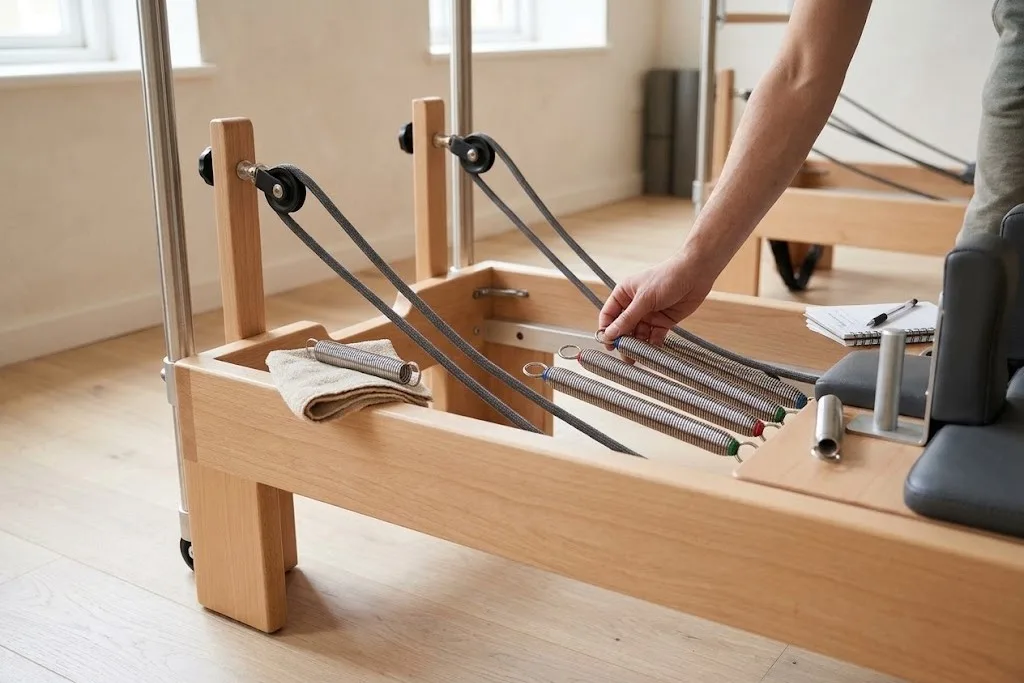
A reformer is a machine with working parts. Springs stretch thousands of times a week. Ropes run over pulleys. Wheels roll on rails. Upholstery takes body weight, sweat and cleaning. A good frame lasts many years, but the parts on it need regular attention to stay safe and smooth.
This article sets out a practical maintenance routine for commercial reformers, drawing on the advice of experienced equipment technicians, engineering references and cleaning guidance.
Why routine matters
Experienced equipment technicians make a simple point: a failed spring can have serious consequences, and it can damage a client’s trust in the studio. Most failures give warning signs. A routine is how a studio sees them in time.
Daily: clean and check
Upholstery. Technicians recommend cleaning vinyl at least once a day, using a spray bottle with a little pure soap in water. They warn against essential oils, bleach, methylated spirits, alcohol-containing wipes, antibacterial sprays, detergents and citrus cleaners, which can strip the oils that keep vinyl flexible and make it crack. They also note that vinyl that looks shiny is drying out, which cannot be reversed.
That advice is for vinyl in general. Clinics and studios that need to disinfect should follow the upholstery manufacturer’s guidance on suitable products. A comparison published by the Chemical Fabrics and Film Association notes that PVC rates good to excellent with disinfectants, while polyurethane rates lower and has failed early with quaternary ammonium cleaners. The US Centers for Disease Control and Prevention advises following the label of any disinfectant, including its contact time.
Carriage. Before the first class, roll the carriage through its full travel. It should move freely and quietly.
Timber. Wipe the frame with a damp cloth and a mild cleaner. Do not flood joints.
Twice weekly: rails and wheels
A good routine is to wipe the reformer tracks with a damp cloth twice a week, running the cloth over the wheels as well. For dark, gritty marks, a non-scratch scourer followed by a wipe is enough. No extra products are needed.
If the carriage rolls audibly or unevenly, it probably needs cleaning. If it still does not roll smoothly after cleaning, the bearings may be wearing and need replacing. The Round Fit Studio Pro Reformer runs on eight polyurethane wheels on anodised aluminium rails.
Weekly: springs, ropes and straps
Springs. There is a simple test. Stretch each spring slightly from its end loop until the coils begin to open. If one section separates while the rest stay closed, the spring is faulty and should be replaced. Replace springs with obvious bends or any rust or corrosion. Springs can also fail in the centre, where it is hard to see during use, so inspect them from underneath or with the carriage moved out of the way. Where possible, rest springs off tension overnight.
Ropes and straps. Some fuzziness from movement is normal. Any thinning needs attention, and frayed stitching should be repaired or the strap replaced.
Monthly: thorough inspection
Once a month, inspect each machine properly:
- Spring clips, hooks and attachment points.
- Footbar locking and adjustment.
- Rope pulleys, cleats and rope ends.
- Headrest and shoulder rests.
- Upholstery seams and edges.
Quarterly: fixings
Check all bolts every three months, and investigate any nut or bolt found on the floor. The Wood Handbook from the US Forest Products Laboratory explains why timber joints need this attention. Fixings in wood that goes through wetting and drying can lose much of their holding power, and bolted joints in new timber may need retightening during the first year as the wood settles. Keep the correct Allen keys and spanners in the studio.
Replace consumables on time
Springs, ropes, straps and upholstery are consumables. They should be replaced when they show wear, and ideally on a planned schedule, not only when they fail. Keep a small stock of spares so a machine can be returned to service quickly.
Keep a log
A simple log for each reformer helps:
- Date of each inspection and who did it.
- Any faults found and action taken.
- Dates when springs, ropes and upholstery were replaced.
Over time, the log shows which parts wear fastest in your studio and when to plan replacements. For chains, it gives head office a clear picture across sites.
When to call for help
Contact the manufacturer or installer if you find:
- Cracks in the frame or around joints.
- Loose joints that do not stay tight after retightening.
- Damage to rails or carriage.
- Any part you cannot identify or replace yourself.
Every Round Fit piece is tested before it leaves the workshop, and frames carry a five-year warranty. Read how we work, or contact us about parts and service.