Many boutique studios run classes back to back. One group leaves as the next arrives, often with ten minutes or less between them. In that time, clients need to drop their things, find a spot and get ready, while the previous class collects their belongings and leaves.
Lockers are essential for valuables, but they are slow for small, everyday items. Opening a locker to store a water bottle, a jumper and a pair of trainers adds minutes to every changeover. Open cubbies solve this. Clients drop their things on the way in and pick them up on the way out, without keys, codes or queues.
What cubbies are for
Cubbies are open compartments for the things clients bring into the studio but do not need during class:
- Shoes and trainers.
- Water bottles and keep cups.
- Jumpers, jackets and towels.
- Small bags that are not worth locking away.
They are not secure storage. Phones, keys and wallets belong in lockers or a small valuables locker. Make the difference clear to clients, with a short sign if needed.
Size the compartments for real items
The most common mistake is getting the compartment size wrong.
- Too shallow, and shoes stick out, bottles fall over and jumpers spill onto the floor.
- Too deep, and the unit takes floor space it does not need, while small items get lost at the back.
- Too small, and clients use two compartments each, or leave things on top.
Bring the items you expect clients to store and measure them. A pair of trainers, a rolled jumper and a large bottle side by side give a good guide to width and height. A depth of around 40 cm suits most of these items without wasting space.
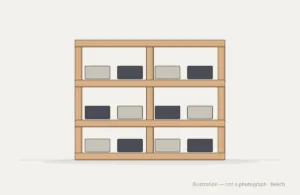
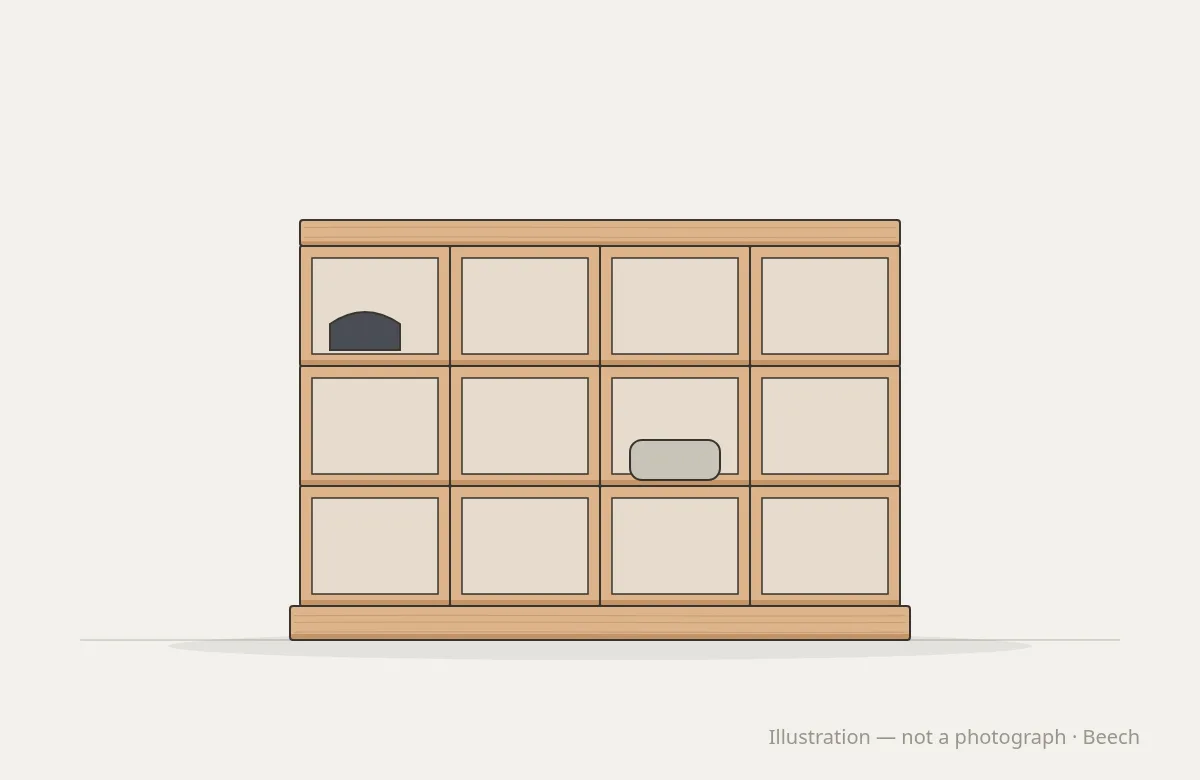
As a reference, a typical Round Fit Studio Space Cubbies unit is 120 × 40 × 140 cm (W × D × H), with open compartments and the option of a bench base, so clients can sit to take off their shoes.
How many compartments
Count against the turnaround, not just one class.
- Start with the capacity of your largest class.
- Add the overlap at changeover, when both groups are in the space at once.
- Add a margin for clients who use more than one compartment.
In a studio running back-to-back classes, the overlap can nearly double the number needed at peak. If space is short, consider shoe storage below and bag storage above, so one client’s belongings stay together in a column.
Where to put them
Placement matters as much as size.
Near the studio entrance, on the route in and out. Clients should drop their things just before they enter and collect them as they leave, without crossing the room or each other.
Visible from the studio floor. Clients relax when they can see their belongings. A cubby unit beside the door or along the front wall, within sight of where they train, works well.
Out of the walkway. The Health and Safety Executive notes that most trips at work are caused by obstructions in walkways. Shoes and bags left in front of a cubby unit become exactly that. Leave enough space in front of the unit for several people to use it at once, and keep it clear of the main route.
Away from water. Do not place cubbies where they will be splashed from showers or wet changing areas.
Height and reach
Clients bend and reach to use cubbies many times a day. The Health and Safety Executive’s manual handling risk filters show that the load a person can handle comfortably falls when it is held at very low or very high levels or with arms extended. Clients’ belongings are light, but awkward reaches still slow the changeover.
- Keep the most used compartments between knee and shoulder height.
- Use the bottom row for shoes, which are naturally stored low.
- Avoid compartments above head height, which go unused or are used awkwardly.
Materials and edges
Cubbies are knocked by bags, feet and shoes, and they hold damp items.
Solid hardwood or plywood. Both give a strong, stable unit. Plywood suits carcasses and dividers; solid hardwood suits fronts, edges and tops. Round Fit never uses chipboard or MDF, which are less tolerant of moisture and knocks.
Rounded edges. Edges at hand and knee height should be rounded, so clients do not catch themselves while hurrying.
Ventilation. Damp towels and shoes dry better in open compartments. Open fronts help, and a small gap at the back allows air to move.
The Wood Handbook from the US Forest Products Laboratory explains that wood swells as humidity rises and shrinks as it falls. Sealing every face, including inside compartments and the back, keeps a unit stable when damp items are stored in it every day.
Cleaning
Cubbies collect dust, sand from shoes and drips from bottles. The US Centers for Disease Control and Prevention distinguishes cleaning, which removes dirt and germs, from disinfecting, which should follow the product label and its contact time. A smooth, sealed surface makes both quick.
Choose a finish that resists water and cleaning products. Resistance of furniture surfaces to liquids is assessed under BS EN 12720. A matt lacquer is practical, because it does not show scuffs and wipe marks the way gloss does.
Pair cubbies with lockers
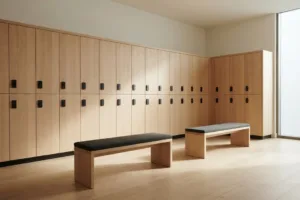
Cubbies and lockers work together. Cubbies take the everyday items; lockers take the valuables. A studio with both can keep changeovers quick without asking clients to leave their phones in an open shelf.
See Studio Interiors for cubbies, lockers and benches in matching timber. Tell us your class sizes and turnaround times, and discuss your project with us. We will size the cubbies for you.